






Menu

Commercial Maintenance Agreements in Philadelphia – Minimize Downtime and Control Operating Costs

Structured commercial HVAC maintenance plans protect your equipment investment, extend system lifespan, and reduce emergency repair expenses through scheduled inspections and priority service access across Philadelphia's commercial corridor.

Slider Image 1
Slider Image 2
Slider Image 3
Slider Image 4
Slider Image 5
Slider Image 7
Slider Image 8
Slider Image 9
Slider Image 10
Slider Image 11

Philadelphia's Commercial Buildings Demand Year-Round Climate Control Reliability

Philadelphia's commercial districts operate in a climate zone that stresses HVAC equipment year-round. Summer humidity averages 70 percent, forcing cooling systems to work harder to maintain dehumidification. Winter temperatures drop into the teens, requiring consistent heating for tenant comfort and preventing frozen pipes in multi-story buildings.

Your commercial HVAC system runs 8,760 hours per year. Without scheduled maintenance, refrigerant leaks develop unnoticed. Condenser coils accumulate biological growth in Philadelphia's humid air. Compressors fail during peak cooling season when replacement costs triple and available technicians disappear.

Commercial HVAC service contracts eliminate reactive maintenance cycles that disrupt business operations. A restaurant in Center City that loses cooling during dinner service turns away customers. An office building in University City with failed heating during January sends employees home. Both situations create revenue loss that exceeds the cost of preventive maintenance by 300 to 500 percent.

Commercial planned maintenance agreements shift your facility management from crisis response to controlled operations. Scheduled filter changes maintain indoor air quality. Quarterly inspections identify worn belts, failing contactors, and refrigerant pressure drops before they cascade into complete system failures. You maintain consistent occupancy comfort and avoid emergency service premiums.

Philadelphia's commercial building stock includes structures from the 1920s alongside modern construction. Both require different maintenance approaches. HVAC preventive maintenance agreements account for equipment age, operating hours, and system complexity to deliver appropriate service frequency.

Philadelphia's Commercial Buildings Demand Year-Round Climate Control Reliability
How Commercial HVAC Service Agreements Protect Your Equipment Investment

How Commercial HVAC Service Agreements Protect Your Equipment Investment

Commercial HVAC maintenance plans follow a scheduled protocol that addresses mechanical wear patterns before they compromise system performance. Elite HVAC Philadelphia structures agreements around equipment type, building size, and operational demands.

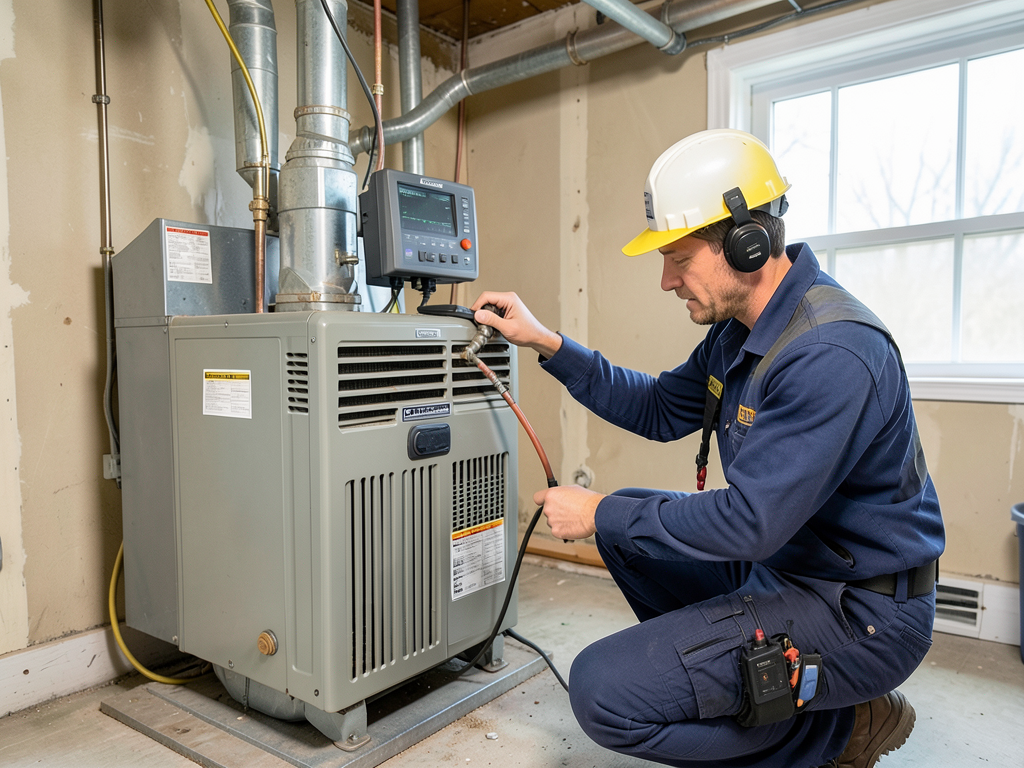
Quarterly inspections examine compressor amperage draw, superheat and subcooling values, and refrigerant pressures. Technicians measure supply and return air temperatures to verify heat transfer efficiency. Condenser and evaporator coils receive chemical cleaning to remove biological growth and particulate buildup that reduces heat exchange capacity.

Electrical components undergo thermal imaging to detect hot connections before they fail. Contactors show wear patterns. Capacitors lose microfarad capacity. Both components fail without warning unless tested during scheduled maintenance visits. Replacing a 45-dollar capacitor during a planned visit prevents a 1,200-dollar emergency call when your compressor fails to start on a 95-degree afternoon.

Commercial HVAC service agreements include filter management protocols. A 20-ton rooftop unit moves 8,000 cubic feet of air per minute. Dirty filters restrict airflow, increase static pressure, and force blower motors to draw excess amperage. Motors overheat and fail. Planned filter changes maintain proper airflow and extend equipment lifespan.

Belt-driven systems require tension checks and alignment verification. Worn belts slip under load, reducing blower performance. Misaligned pulleys cause premature bearing failure. Both issues get addressed during routine maintenance before they create occupant complaints or equipment damage.

HVAC service agreements prioritize your facility for emergency repairs. When systems fail despite preventive maintenance, agreement holders receive priority dispatch and discounted labor rates. Your building moves to the front of the service queue instead of waiting 48 hours during peak seasons.

Building Your Commercial Maintenance Agreement

Commercial Maintenance Agreements in Philadelphia – Minimize Downtime and Control Operating Costs
01

Equipment Assessment

Elite HVAC Philadelphia conducts a comprehensive facility walk to document all HVAC equipment, age, condition, and operating parameters. We measure equipment tonnage, verify refrigerant types, photograph electrical panels, and note any immediate concerns. This assessment determines appropriate service frequency and creates your baseline equipment profile for future comparison and maintenance scheduling.
02

Agreement Structuring

We design a commercial HVAC service contract based on your equipment profile and operational needs. Service frequency ranges from quarterly to monthly depending on system complexity and runtime hours. Agreement terms specify covered tasks including filter changes, coil cleaning, refrigerant checks, electrical testing, and belt adjustments. You receive transparent pricing with no hidden fees or service exclusions that compromise coverage.
03

Scheduled Service Execution

Maintenance visits follow your agreed schedule. Technicians arrive with equipment-specific checklists to complete all contracted tasks. Each visit generates a detailed service report documenting measurements, findings, and recommendations. You receive advance notice of components approaching end-of-life, allowing you to budget replacements instead of facing emergency expenses. This documentation also supports warranty claims and property value assessments.

Why Philadelphia Commercial Property Managers Choose Elite HVAC

Philadelphia's commercial building requirements differ across neighborhoods and construction eras. Properties along the Delaware waterfront face salt air corrosion that accelerates condenser deterioration. Buildings in Old City operate within historic preservation guidelines that restrict equipment placement and modifications. Understanding these local factors matters when maintaining commercial HVAC systems.

Elite HVAC Philadelphia maintains commercial HVAC service agreements across office buildings, retail centers, restaurants, medical facilities, and industrial properties throughout the Philadelphia metro. We understand the operational demands that separate commercial service from residential work. Your tenants expect consistent climate control. Your property value depends on functioning mechanical systems. Your operating budget cannot absorb emergency repair costs.

Commercial planned maintenance agreements reduce your total cost of ownership by extending equipment lifespan and preventing catastrophic failures. A properly maintained rooftop unit operates 15 to 20 years. Neglected equipment fails in 8 to 12 years. The difference represents tens of thousands of dollars in premature replacement costs multiplied across every unit in your building.

We structure agreements around your operational calendar. Retail properties need guaranteed cooling performance before summer traffic peaks. Office buildings require heating reliability before winter occupancy. Restaurant clients cannot tolerate service disruptions during peak dining hours. Your maintenance schedule aligns with business needs instead of following arbitrary quarterly intervals.

Philadelphia's commercial property market demands verifiable maintenance records for property transactions and tenant negotiations. Our detailed service documentation provides the operational history that supports property valuations and demonstrates proper asset management. You maintain comprehensive records without administrative overhead.

What Your Commercial Maintenance Agreement Includes

Service Visit Frequency and Response Times

Agreement holders receive scheduled maintenance visits based on equipment demands and operating hours. Standard agreements include quarterly inspections with filter changes, coil cleaning, and system testing. High-demand facilities like restaurants and data centers qualify for monthly service. Emergency repairs receive priority dispatch with guaranteed response within four hours during business days. After-hours emergencies get addressed the same evening instead of waiting until the next business day. You pay predictable monthly fees instead of variable service costs.

Comprehensive System Inspection Protocol

Each maintenance visit follows a detailed checklist specific to your equipment type. Technicians measure refrigerant pressures, test electrical components, verify thermostat operation, inspect condensate drains, check gas pressure on heating equipment, lubricate motors and bearings, and verify safety controls. Thermal imaging detects electrical hot spots. Combustion analysis ensures proper furnace operation. You receive a written report after every visit documenting all measurements and identifying any components requiring attention before the next scheduled service.

Labor and Repair Cost Management

Commercial HVAC maintenance plans include labor for all covered tasks. Filter replacements, belt changes, and minor adjustments occur at no additional charge during scheduled visits. Agreement holders receive discounted labor rates on repairs not covered under the maintenance agreement. This pricing structure eliminates surprise invoices and allows accurate budget forecasting. Parts remain separate charges, but you pay wholesale pricing plus a transparent markup instead of retail rates. Emergency service premiums get waived for agreement holders even during weekend calls.

Equipment Performance Documentation and Planning

Every service visit generates performance data that tracks system efficiency over time. Rising amperage draw signals motor wear. Declining refrigerant pressures indicate leaks. Increasing supply air temperatures reveal heat exchanger problems. This trend analysis identifies declining performance before complete failure occurs. You receive advance notice when major components approach end-of-life, allowing planned replacement during off-season when costs drop and equipment availability improves. Documentation supports capital planning and property management reporting requirements.

Frequently Asked Questions

You Have Questions,
We Have Answers

What should be included in a maintenance agreement? +

A maintenance agreement should include scheduled inspections, filter replacements, system cleaning, lubrication of moving parts, and refrigerant level checks. Priority service access, discounted repair rates, and detailed inspection reports are standard. For Philadelphia commercial properties, agreements must address humidity control due to regional climate conditions and ensure compliance with city mechanical codes. Include terms for emergency response times, parts coverage specifications, and labor warranties. Agreements should outline inspection frequency tied to equipment type and operational hours. Clear cancellation policies, billing cycles, and system performance benchmarks protect both parties. Documentation of baseline efficiency metrics enables tracking ROI over the contract term.

What is the difference between AMC and CAMC? +

AMC covers labor, inspection visits, and routine maintenance tasks like filter changes and system cleaning. CAMC includes parts replacement costs in addition to all AMC services. Philadelphia commercial facilities with aging equipment benefit from CAMC because parts costs are predictable and budgetable. AMC works best for newer systems under manufacturer warranty. CAMC eliminates surprise expenses when compressors, motors, or controls fail. The price difference reflects parts coverage, which varies based on equipment age and complexity. Buildings with multiple RTUs or large tonnage systems often choose CAMC to avoid capital expense approvals for each repair. Your operational budget structure determines which contract type minimizes downtime costs.

What are the 4 types of maintenance? +

The four types are corrective, preventive, predictive, and reliability-centered maintenance. Corrective fixes failures after they occur. Preventive follows scheduled intervals regardless of equipment condition. Predictive uses data monitoring and diagnostics to address issues before failure. Reliability-centered prioritizes maintenance activities based on failure consequences and business impact. Philadelphia commercial properties typically combine preventive and predictive methods. Older buildings may rely more on corrective approaches due to budget constraints. Modern BAS systems enable predictive strategies through real-time performance tracking. High-occupancy facilities prioritize reliability-centered maintenance to avoid business interruption costs. Your maintenance strategy should match equipment criticality and operational requirements.

What is a standard maintenance agreement? +

A standard maintenance agreement establishes scheduled service visits, typically quarterly, for inspection and tune-up procedures. It covers filter changes, belt adjustments, electrical connection testing, and control calibration. Labor is included, but parts are billed separately unless specified. Philadelphia agreements should address seasonal transitions, particularly spring cooling preparation and fall heating readiness. Response time guarantees for service calls protect operational continuity. Standard agreements exclude major repairs, refrigerant recharges beyond minor top-offs, and ductwork modifications. Documentation requirements, billing terms, and contract renewal conditions are defined upfront. The agreement outlines technician qualifications and ensures compliance with manufacturer specifications to protect equipment warranties.

What is the 80 20 rule in maintenance? +

The 80/20 rule states that 80 percent of equipment failures stem from 20 percent of components. Focus maintenance resources on critical components like compressors, motors, controls, and heat exchangers. Philadelphia commercial properties experience accelerated wear on outdoor units due to humidity and temperature swings. Condensate drains and dampers require disproportionate attention in this climate. Allocate inspection time to high-failure-rate items rather than spreading effort evenly across all components. Track failure data to identify your specific 20 percent. This approach maximizes maintenance ROI by preventing costly downtime. Priority-based maintenance scheduling reduces total labor hours while improving system reliability and extending equipment lifespan.

What are the 7 elements of maintenance? +

The seven elements are planning, scheduling, execution, documentation, analysis, improvement, and compliance. Planning identifies maintenance tasks based on equipment requirements and failure history. Scheduling assigns resources and timing to minimize operational disruption. Execution follows technical procedures and safety protocols. Documentation creates service records for compliance and analysis. Analysis reviews performance trends and failure patterns. Improvement adjusts maintenance strategies based on data insights. Compliance ensures adherence to manufacturer specifications, safety codes, and Philadelphia mechanical regulations. Commercial facilities need structured processes for each element. Effective maintenance management integrates these elements through work order systems, performance tracking, and continuous refinement of maintenance procedures.

What is the 10% rule of preventive maintenance? +

The 10 percent rule allocates 10 percent of equipment replacement value annually to preventive maintenance costs. A $50,000 rooftop unit justifies $5,000 yearly in maintenance investment. This benchmark helps Philadelphia commercial property managers budget appropriately. Underfunding maintenance accelerates depreciation and increases total lifecycle costs. The rule accounts for labor, parts, inspections, and minor repairs. High-use equipment or harsh environmental conditions may require higher percentages. Calculate costs per ton of cooling or square footage served for budgeting clarity. Compare preventive maintenance spending against emergency repair costs and downtime losses. Proper investment extends equipment life 40 to 60 percent beyond typical replacement timelines.

What does an annual maintenance contract include? +

An annual maintenance contract includes two to four scheduled service visits covering inspection, cleaning, and adjustment tasks. Contracts specify filter replacements, belt inspections, electrical testing, refrigerant checks, and control calibration. Priority service access and discounted repair rates are standard benefits. Philadelphia contracts should address seasonal preparation for cooling and heating modes. Documentation includes inspection reports with photos and performance data. Contracts typically exclude refrigerant recharges beyond minor top-offs, major component replacements, and ductwork repairs. Service response times are guaranteed, protecting business continuity. Clear terms define parts coverage, labor warranties, and contract renewal conditions. Annual agreements reduce emergency service needs by 60 to 70 percent.

What are the two types of AMC? +

The two types are non-comprehensive and comprehensive AMC. Non-comprehensive covers labor for scheduled maintenance and repairs, with parts billed separately. Comprehensive includes both labor and parts replacement costs. Philadelphia commercial facilities with equipment beyond warranty periods benefit from comprehensive contracts because parts costs are predictable. Non-comprehensive works for newer systems where parts failures are unlikely. Comprehensive contracts cost 30 to 50 percent more but eliminate budget surprises. Your choice depends on equipment age, criticality, and risk tolerance. Buildings with multiple units often split approaches, using comprehensive coverage for critical systems and non-comprehensive for redundant equipment. Contract structure should match operational priorities and financial planning requirements.

What are the 3 P's of maintenance? +

The three Ps are preservation, prevention, and prediction. Preservation maintains current equipment condition through cleaning, lubrication, and adjustment. Prevention addresses wear before failure occurs through scheduled component replacement. Prediction uses performance monitoring and diagnostics to identify developing issues. Philadelphia commercial systems benefit from all three approaches. Preservation tasks include coil cleaning and filter changes to combat regional humidity. Prevention replaces belts, contactors, and capacitors on time-based schedules. Prediction monitors amperage, temperatures, and pressures to detect efficiency loss or impending failures. Balancing the three Ps optimizes maintenance spending while maximizing uptime. Modern BAS systems enable prediction strategies that reduce total maintenance costs.

How Philadelphia's Four-Season Climate Accelerates Commercial HVAC Wear

Philadelphia commercial buildings cycle through temperature extremes that stress HVAC equipment year-round. Summer temperatures reach the mid-90s with sustained humidity that forces cooling systems into continuous operation. Winter cold snaps drop into the teens, requiring heating systems to maintain 70-degree indoor temperatures against 60-degree differentials. Spring and fall create swing seasons where buildings need heating in the morning and cooling by afternoon. This constant cycling wears contactors, stresses compressors, and fatigues expansion valves faster than equipment operating in moderate climates. Commercial HVAC service contracts become essential in Philadelphia because equipment here experiences wear patterns equivalent to 50 percent more runtime than similar buildings in temperate zones.

Philadelphia's commercial corridors include Center City office towers, industrial properties along I-95, retail centers in the Northeast, and medical facilities across University City. Elite HVAC Philadelphia services all commercial property types and understands the operational demands specific to each sector. Our technicians know which buildings operate 24-hour schedules requiring redundant systems and which properties can schedule maintenance during closed hours. We maintain relationships with property management companies throughout Philadelphia and structure HVAC preventive maintenance agreements that align with portfolio standards and reporting requirements. Local expertise matters because Philadelphia's commercial market demands proven performance.
HVAC Services in The Philadelphia Area

Come visit our office or explore our extensive service area on the map below. Elite HVAC proudly serves residential and commercial clients across Philadelphia, ensuring prompt and reliable heating, ventilation, and air conditioning solutions wherever you are. Whether you need an emergency repair or a new installation, we’re strategically located to provide quick and efficient service right to your doorstep, ensuring your comfort is never compromised.

Address:
Elite HVAC Philadelphia, 2231 E Ontario St, Philadelphia, PA, 19134

Additional Services We Offer

Our news updates

Latest Articles & News from The Blogs

Creating an Allergy Friendly Home in Elkins Park with Advanced Air Scrubbers Philadelphia's humid continental climate creates perfect conditions for…

Creating an Allergy Friendly Home in Elkins Park with Advanced Air Scrubbers

Creating an Allergy Friendly Home in Elkins Park with Advanced Air Scrubbers Philadelphia's humid continental climate creates perfect conditions for…

The Best Way to Get Central Air into Your Olney Attic Conversion

Why Your Olney Attic Bedroom Feels Like an Oven Philadelphia summers turn your Olney attic into a heat trap. Hot…

Simple HVAC Tasks Port Richmond Homeowners Can Actually Do Themselves

Simple HVAC Tasks Port Richmond Homeowners Can Actually Do Themselves\n\nPort Richmond homeowners can handle several basic HVAC maintenance tasks that…

Contact Us

Commercial HVAC failures create operational chaos and financial losses that exceed preventive maintenance costs by multiples. Call (215) 610-9099 to schedule your facility assessment and receive a customized commercial maintenance agreement proposal. Stop reacting to equipment failures and start controlling your HVAC operations.