
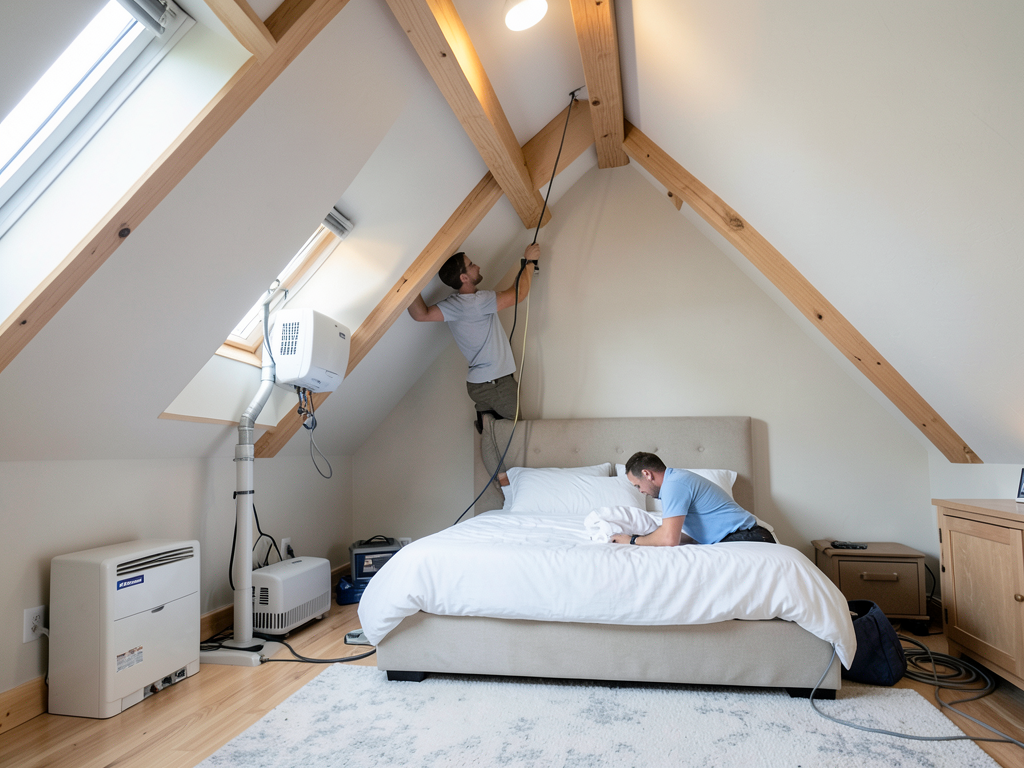
Why Your Olney Attic Bedroom Feels Like an Oven
Philadelphia summers turn your Olney attic into a heat trap. Hot air rises. Your roof absorbs direct sunlight. Without proper cooling, your finished attic becomes unbearable by July. Many homeowners in zip codes 19120 and 19124 face this exact problem after finishing their third-floor spaces. HVAC Philadelphia.
The issue isn’t just temperature. Philadelphia’s high humidity makes the heat feel heavier. Your body can’t cool itself through sweat when the air is already saturated with moisture. This creates a dangerous combination of heat and humidity that standard fans can’t fix. Best Rated HVAC Contractors in the Main Line Area.
Most Olney homes were built before central air was standard. Your attic likely has limited or no ductwork. The roof structure creates tight spaces that trap heat. These architectural realities mean you need specialized solutions designed for Philadelphia’s climate and housing stock. The True Cost of Installing Central Air in an Older South Philly Rowhome.
Quick Fixes That Won’t Break the Bank
Before calling an HVAC contractor, try these immediate solutions. They won’t replace professional cooling but can provide temporary relief while you plan your permanent fix.
Install blackout cellular shades on all attic windows. These create an insulating air pocket that blocks radiant heat. Look for R-values of 3.5 or higher. Mount them as close to the glass as possible to trap hot air between the shade and window.
Run a dehumidifier continuously during summer months. Philadelphia’s average July humidity hits 72%. A 30-pint unit can remove several gallons of moisture daily, making the air feel cooler. Empty the reservoir daily or connect it to a drain.
Position box fans strategically to create cross-ventilation. Place one fan blowing in from the coolest part of the house, usually a lower floor. Position another fan blowing out an attic window. This creates airflow that pushes hot air out. Weak Airflow from Vents.
Replace incandescent light bulbs with LEDs. A single 60-watt incandescent bulb generates 85 BTUs of heat per hour. LEDs produce the same light using 85% less energy and almost no heat. Energy Star certified equipment.
Professional HVAC Solutions for Your Attic
When quick fixes aren’t enough, you need professional cooling systems designed for attic spaces. Two main options exist: ductless mini-splits and zoned central air systems.
Ductless mini-splits offer the most flexibility for Olney attics. These systems have an outdoor compressor unit connected to one or more indoor air handlers. No ductwork required. Installation takes one to two days. Units mount on walls or ceilings, perfect for sloped attic ceilings.
Energy efficiency matters in Philadelphia’s climate. Look for units with SEER ratings of 18 or higher. The higher the SEER, the less electricity the system uses. Over a Philadelphia summer, this can save $30-$50 monthly on cooling costs.
Zoned central air systems work if you have existing ductwork. These systems use electronic dampers to direct cool air only where needed. Your attic gets its own thermostat. This prevents overcooling the rest of your house just to cool the attic.
BTU requirements depend on your attic’s size and sun exposure. A 400-square-foot attic in direct sun needs about 9,000 BTUs for cooling. Add 600 BTUs for each person regularly using the space. Add 1,000 BTUs if the attic has many windows.
Insulation and Ventilation: The Foundation of Comfort
Cooling systems work best when paired with proper insulation and ventilation. These prevent heat from entering your attic in the first place.
Attic insulation in Pennsylvania must meet R-38 minimum per Department of Energy guidelines. This equals about 12-15 inches of fiberglass or 8-10 inches of spray foam. Many Olney attics have only R-19 or less, built before modern energy codes.
Radiant barriers reflect heat away from your living space. These aluminum sheets install under roof rafters. They can reduce attic temperatures by 15-20 degrees on sunny days. Installation costs $1-2 per square foot.
Solar attic fans exhaust hot air automatically when temperatures rise. These 10-20 watt fans mount on roof peaks. They cost nothing to operate since they run on solar power. One fan handles up to 1,200 square feet of attic space.
Soffit vents allow cool outside air to enter the attic. This creates natural airflow that pushes hot air out through roof vents. Without soffit vents, hot air gets trapped and radiates down into your living space.
Philadelphia-Specific Challenges and Solutions
Olney’s row homes present unique cooling challenges. Shared walls mean heat from neighboring houses transfers into yours. Narrow lot widths limit airflow around your home. These factors require specialized approaches.
Historic district regulations in parts of Olney may restrict exterior modifications. Ductless mini-splits work well here since they require minimal exterior changes. Only a small 3-inch hole through the wall connects indoor and outdoor units.
Philadelphia’s humid summers strain cooling systems. Standard AC units remove heat but may not remove enough moisture. Look for systems with enhanced dehumidification modes. These cycle longer at lower cooling output to pull more moisture from the air.
PECO offers rebates for high-efficiency HVAC upgrades. Current programs provide up to $300 for SEER 18+ systems. You must use a participating contractor and submit proof of purchase. These rebates can offset 10-15% of installation costs.
Philadelphia’s freeze-thaw cycles affect outdoor unit placement. Install compressors on level, stable surfaces. Use vibration pads to prevent noise transfer to your home’s structure. Position units where snow won’t bury them in winter.
Cost Comparison and ROI Analysis
Understanding costs helps you budget for your attic cooling project. Prices vary based on system size, installation complexity, and chosen features.
| Solution | Initial Cost | Monthly Operating Cost | Installation Time |
|---|---|---|---|
| Portable AC Unit | $400-600 | $50-70 | 30 minutes |
| Ductless Mini-Split | $3,500-5,500 | $25-40 | 1-2 days |
| Zoned Central Air | $6,000-9,000 | $30-45 | 2-4 days |
Energy savings provide the best return on investment. High-efficiency systems use 30-50% less electricity than older units. In Philadelphia, where summer cooling can cost $150+ monthly, these savings add up quickly.
Increased home value represents another benefit. Finished attics with proper climate control add 10-15% to your home’s market value. Buyers in Olney specifically ask about third-floor cooling when touring homes.
Maintenance costs remain minimal for modern systems. Annual professional cleaning costs $150-200. Filter changes every 2-3 months cost $15-30. These small investments prevent expensive repairs and maintain efficiency. Emergency AC Repair in Fishtown (Fast Service When the Heat Hits).
Professional Installation: What to Expect
Professional installation ensures your system works correctly and efficiently. The process typically follows these steps:
- Initial Assessment
Technician measures your attic, evaluates existing infrastructure, and calculates cooling load. This takes 30-60 minutes.
- System Design
Based on assessment, contractor designs optimal system layout. They consider factors like sun exposure, room usage, and your budget.
- Permit Acquisition
Philadelphia requires permits for most HVAC work. Your contractor handles this process, which takes 1-2 weeks.
- Installation
Technicians install indoor and outdoor units, connect refrigerant lines, and test the system. This phase takes 1-4 days depending on complexity.
- Final Testing
Contractor verifies proper operation, checks for leaks, and ensures all components work together. They also explain system operation to you.
Quality installation prevents future problems. Poor installation causes 70% of HVAC system failures. Always verify your contractor’s license and insurance before work begins.
Ask about warranties. Most manufacturers offer 5-10 year parts warranties. Labor warranties vary by contractor. A 2-year labor warranty is standard in Philadelphia.
Maintenance Tips for Long-Term Performance
Proper maintenance keeps your system running efficiently for years. Follow these practices to maximize performance and minimize repairs.
Change air filters monthly during cooling season. Philadelphia’s pollen and dust clog filters quickly. Restricted airflow forces your system to work harder, increasing energy costs and wear.
Keep outdoor units clear of debris. Philadelphia’s trees drop leaves, seeds, and pollen that can block condenser coils. Clear a 2-foot space around the unit. Rinse coils gently with a garden hose each spring.
Schedule professional maintenance annually. Technicians check refrigerant levels, clean coils, and test electrical components. Catching small problems early prevents expensive emergency repairs during heat waves.
Monitor your system’s performance. If cooling takes longer than usual or some rooms feel warmer, call for service. These symptoms often indicate developing problems that are easier to fix when caught early.
Consider a smart thermostat. These devices learn your schedule and adjust temperatures automatically. They can save 10-15% on cooling costs while maintaining comfort. Many work with voice assistants for convenient control.
Emergency Situations and Troubleshooting
Even well-maintained systems can develop problems. Knowing basic troubleshooting helps you decide when to call for emergency service.
If your system won’t turn on, check the circuit breaker first. HVAC systems need dedicated 240-volt circuits. A tripped breaker often indicates a developing electrical problem that needs professional attention.
Strange noises signal mechanical issues. Grinding sounds suggest failing bearings. Hissing might indicate refrigerant leaks. Buzzing could mean electrical problems. Turn off the system and call for service when you hear unusual noises.
Water leaks around indoor units often mean clogged condensate drains. Philadelphia’s humidity causes these drains to clog with algae and debris. While you can clear simple clogs, recurring problems need professional cleaning.
Weak airflow might mean dirty filters, blocked ducts, or failing blower motors. Check filters first. If clean filters don’t solve the problem, call for diagnosis before the issue worsens.
Emergency service in Philadelphia typically costs 1.5-2 times normal rates. Many companies charge extra for night, weekend, or holiday calls. Regular maintenance prevents most emergencies and saves money long-term.
Frequently Asked Questions
How long does it take to cool an attic with central air?
A properly sized system typically cools an attic bedroom in 30-45 minutes. Factors affecting cooling time include outside temperature, insulation quality, and system efficiency. High-efficiency units with variable-speed blowers cool more quickly and evenly than single-speed systems.
Can I install central air in my old Olney row home?
Yes, but installation can be complex due to limited space for ductwork. Ductless mini-splits offer the best solution for most Olney homes. These require only a small wall penetration and work well with the existing architecture. Some homeowners modify closets or chase spaces to run minimal ductwork.
What size AC unit do I need for my attic?
Calculate based on square footage and sun exposure. A 400-square-foot attic needs about 9,000 BTUs. Add 600 BTUs per person and 1,000 BTUs for sunny exposure. Philadelphia’s humidity means you should slightly oversize rather than undersize. An HVAC professional can perform a precise Manual J calculation.
Are there any rebates available for attic cooling systems in Philadelphia?
Yes. PECO offers rebates up to $300 for high-efficiency HVAC systems. The federal government provides tax credits for Energy Star certified equipment. Some Philadelphia programs offer additional incentives for homes in certain zip codes. Check current programs before purchasing your system.
How much does it cost to cool an attic bedroom monthly?
Monthly cooling costs range from $25-45 for efficient systems to $75-100 for older or improperly sized units. Factors affecting costs include system efficiency, insulation quality, thermostat settings, and Philadelphia’s summer temperatures. High-efficiency mini-splits typically provide the lowest operating costs.
Ready to Cool Your Olney Attic?
Don’t spend another summer sweating in your attic bedroom. The right cooling solution transforms your space from an oven into a comfortable retreat. Whether you need quick fixes or complete system installation, professional help makes the process simple.
Call (215) 610-9099 today to schedule your free attic cooling assessment. Our experienced technicians understand Philadelphia’s unique climate challenges and Olney’s specific housing characteristics. We’ll evaluate your space, discuss your options, and provide clear pricing with no hidden fees.
Pick up the phone and call (215) 610-9099 before the next heat wave hits. Your comfortable attic bedroom is just one call away. We serve all of Olney and surrounding Philadelphia neighborhoods with prompt, professional service that puts your comfort first.
{
“@context”: “https://schema.org”,
“@type”: “BlogPosting”,
“headline”: “The Best Way to Get Central Air into Your Olney Attic Conversion”,
“description”: “Struggling with attic heat in your Olney home? Learn expert HVAC solutions for attic conversions, from mini-splits to insulation upgrades, tailored for Philadelphia’s climate.”,
“wordCount”: 1967,
“datePublished”: “2026-05-19T12:49:00.000Z”,
“dateModified”: “2026-05-19T12:49:00.000Z”,
“inLanguage”: “en-US”,
“mainEntityOfPage”: {
“@type”: “WebPage”,
“@id”: “https://elitehvacphiladelphia.com”
},
“publisher”: {
“@type”: “LocalBusiness”,
“name”: “Elite HVAC Philadelphia”,
“url”: “https://elitehvacphiladelphia.com”
},
“author”: {
“@type”: “Organization”,
“name”: “Elite HVAC Philadelphia”,
“url”: “https://elitehvacphiladelphia.com”
},
“image”: {
“@type”: “ImageObject”,
“url”: “https://elitehvacphiladelphia.com/wp-content/uploads/2026/03/the-best-way-to-get-central-air-into-your-olney-at-1.png”
}
}
{
“@context”: “https://schema.org”,
“@type”: “HVACBusiness”,
“name”: “Elite HVAC Philadelphia”,
“url”: “https://elitehvacphiladelphia.com”,
“address”: {
“@type”: “PostalAddress”,
“addressLocality”: “Philadelphia”
},
“areaServed”: {
“@type”: “City”,
“name”: “Philadelphia”
}
}
{
“@context”: “https://schema.org”,
“@type”: “FAQPage”,
“mainEntity”: [
{
“@type”: “Question”,
“name”: “How long does it take to cool an attic with central air?”,
“acceptedAnswer”: {
“@type”: “Answer”,
“text”: “A properly sized system typically cools an attic bedroom in 30-45 minutes. Factors affecting cooling time include outside temperature, insulation quality, and system efficiency. High-efficiency units with variable-speed blowers cool more quickly and evenly than single-speed systems.”
}
},
{
“@type”: “Question”,
“name”: “Can I install central air in my old Olney row home?”,
“acceptedAnswer”: {
“@type”: “Answer”,
“text”: “Yes, but installation can be complex due to limited space for ductwork. Ductless mini-splits offer the best solution for most Olney homes. These require only a small wall penetration and work well with the existing architecture. Some homeowners modify closets or chase spaces to run minimal ductwork.”
}
},
{
“@type”: “Question”,
“name”: “What size AC unit do I need for my attic?”,
“acceptedAnswer”: {
“@type”: “Answer”,
“text”: “Calculate based on square footage and sun exposure. A 400-square-foot attic needs about 9,000 BTUs. Add 600 BTUs per person and 1,000 BTUs for sunny exposure. Philadelphia’s humidity means you should slightly oversize rather than undersize. An HVAC professional can perform a precise Manual J calculation.”
}
},
{
“@type”: “Question”,
“name”: “How much does it cost to cool an attic bedroom monthly?”,
“acceptedAnswer”: {
“@type”: “Answer”,
“text”: “Monthly cooling costs range from $25-45 for efficient systems to $75-100 for older or improperly sized units. Factors affecting costs include system efficiency, insulation quality, thermostat settings, and Philadelphia’s summer temperatures. High-efficiency mini-splits typically provide the lowest operating costs.”
}
},
{
“@type”: “Question”,
“name”: “Ready to Cool Your Olney Attic?”,
“acceptedAnswer”: {
“@type”: “Answer”,
“text”: “Don’t spend another summer sweating in your attic bedroom. The right cooling solution transforms your space from an oven into a comfortable retreat. Whether you need quick fixes or complete system installation, professional help makes the process simple.”
}
}
]
}
{
“@context”: “https://schema.org”,
“@type”: “HowTo”,
“name”: “Professional HVAC Installation Process”,
“step”: [
{
“@type”: “HowToStep”,
“position”: 1,
“name”: “Initial Assessment”,
“text”: “Technician measures your attic, evaluates existing infrastructure, and calculates cooling load. This takes 30-60 minutes.”
},
{
“@type”: “HowToStep”,
“position”: 2,
“name”: “System Design”,
“text”: “Based on assessment, contractor designs optimal system layout. They consider factors like sun exposure, room usage, and your budget.”
},
{
“@type”: “HowToStep”,
“position”: 3,
“name”: “Permit Acquisition”,
“text”: “Philadelphia requires permits for most HVAC work. Your contractor handles this process, which takes 1-2 weeks.”
},
{
“@type”: “HowToStep”,
“position”: 4,
“name”: “Installation”,
“text”: “Technicians install indoor and outdoor units, connect refrigerant lines, and test the system. This phase takes 1-4 days depending on complexity.”
},
{
“@type”: “HowToStep”,
“position”: 5,
“name”: “Final Testing”,
“text”: “Contractor verifies proper operation, checks for leaks, and ensures all components work together. They also explain system operation to you.”
}
],
“image”: “https://elitehvacphiladelphia.com/wp-content/uploads/2026/03/the-best-way-to-get-central-air-into-your-olney-at-1.png”
}
{
“@context”: “https://schema.org”,
“@type”: “BreadcrumbList”,
“itemListElement”: [
{
“@type”: “ListItem”,
“position”: 1,
“name”: “Home”,
“item”: “https://elitehvacphiladelphia.com”
},
{
“@type”: “ListItem”,
“position”: 2,
“name”: “Blog”,
“item”: “https://elitehvacphiladelphia.com/blog”
},
{
“@type”: “ListItem”,
“position”: 3,
“name”: “The Best Way to Get Central Air into Your Olney Attic Conversion”
}
]
}
{
“@context”: “https://schema.org”,
“@type”: “Service”,
“serviceType”: “HVAC”,
“provider”: {
“@type”: “LocalBusiness”,
“name”: “Elite HVAC Philadelphia”,
“url”: “https://elitehvacphiladelphia.com”
},
“areaServed”: {
“@type”: “City”,
“name”: “Philadelphia”
},
“description”: “Struggling with attic heat in your Olney home? Learn expert HVAC solutions for attic conversions, from mini-splits to insulation upgrades, tailored for Philadelphia’s climate.”
}