
The Best Way to Ventilate and Condition a Huntingdon Valley Sunroom for Comfort All Year Long
Adding a sunroom to your Huntingdon Valley home creates a beautiful space to enjoy Pennsylvania’s changing seasons, but without proper HVAC, that glass-enclosed room can become unbearable in summer heat or freezing in winter. The challenge lies in balancing the unique heat gain from large windows against the need for efficient, cost-effective climate control. This guide breaks down the most effective ways to keep your Huntingdon Valley sunroom comfortable year-round, from ductless mini-splits to smart zoning solutions.
Why Standard HVAC Often Fails Sunrooms
Most Huntingdon Valley homes weren’t designed with glass-heavy additions in mind. Standard ductwork struggles to deliver enough conditioned air to a sunroom because of the massive heat gain through windows. During Philadelphia’s humid summers, a sunroom can easily reach 90°F or higher even when the rest of your house feels comfortable. In winter, those same windows become thermal holes, letting precious heat escape into the cold air. HVAC Philadelphia.
The fundamental problem is that sunrooms have completely different heating and cooling loads than the rest of your home. A typical Manual J calculation for a Huntingdon Valley living room might call for 24,000 BTU, but the same-sized sunroom with floor-to-ceiling windows could need 36,000 BTU or more just to maintain 75°F on a sunny winter day. Simply adding a vent to your existing system creates imbalance, making other rooms too hot or too cold while the sunroom still struggles.
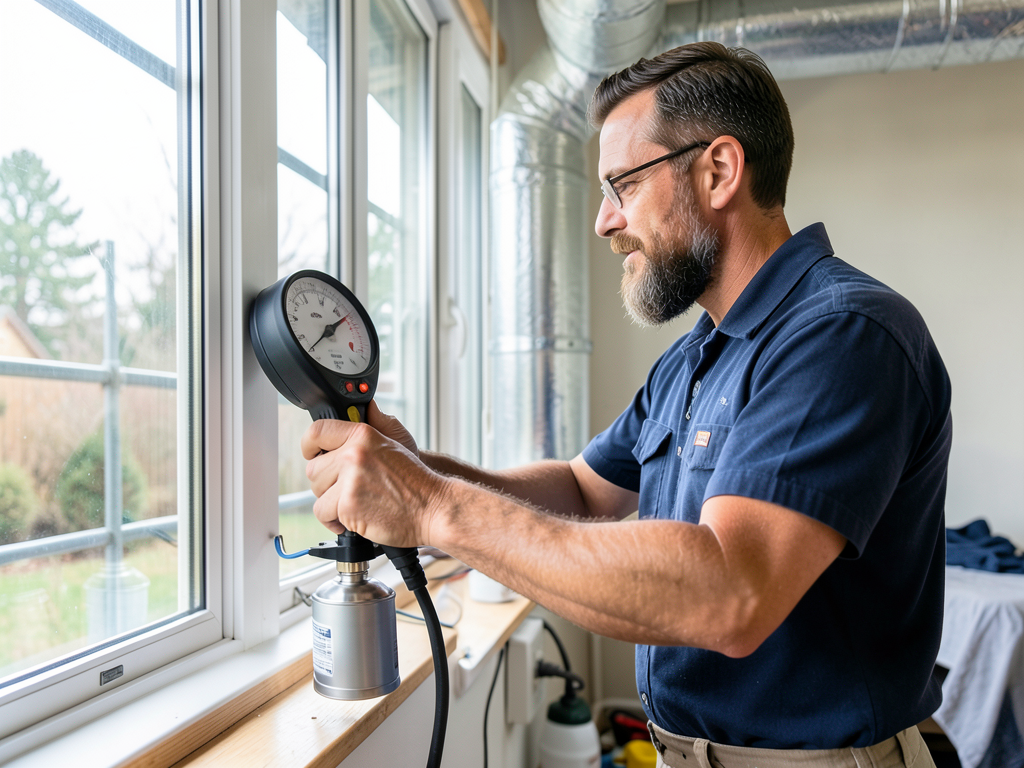
A technician uses a digital manometer to measure static pressure in sunroom ductwork during load calculation testing.
Top 3 HVAC Options for Philly Sunrooms
Ductless Mini-Split Systems (The Gold Standard)
Ductless mini-splits have become the go-to solution for Huntingdon Valley sunrooms because they handle the unique demands of glass-heavy spaces. These systems consist of an outdoor condenser unit connected to one or more indoor air handlers mounted on your sunroom walls or ceiling. The key advantage is that each unit operates independently, so you can heat or cool just the sunroom without affecting your home’s main HVAC system.
For a typical Huntingdon Valley sunroom, a 12,000 to 18,000 BTU mini-split handles most four-season rooms up to 400 square feet. The systems excel at both heating and cooling, with modern heat pumps maintaining efficiency even when temperatures drop below freezing. This matters in Montgomery County where winter nights often hit the teens. Look for units with at least 18 SEER2 efficiency rating to keep operating costs reasonable through Philadelphia’s long cooling season. Montgomery County permit requirements.
Extending Existing Ductwork (When It Makes Sense)
Sometimes extending your home’s existing ductwork to the sunroom works, but only if done correctly. The key is proper sizing and zoning. Your HVAC contractor needs to perform a complete Manual J load calculation for the entire house with the sunroom included, then resize the main trunk line and add dampers to prevent the sunroom from stealing airflow from other rooms. Weak Airflow from Vents.
This approach works best when your existing system has excess capacity and your home uses modern, properly sized ductwork. In older Huntingdon Valley homes with plaster walls and minimal attic space, running new ducts can be invasive and expensive. The installation might require cutting into walls or building soffits to hide ductwork, adding significant cost to the project.
PTAC Units and Through-the-Wall Options
Packaged Terminal Air Conditioners (PTAC) offer another solution, especially for sunrooms built as true additions with exterior walls. These self-contained units fit through an exterior wall and provide both heating and cooling. They’re common in hotels but work well for sunrooms where you want independent temperature control without the higher cost of a mini-split system.
The main advantage of PTACs is their all-in-one design and relatively simple installation. However, they tend to be noisier than mini-splits and less energy efficient, typically operating in the 10-12 EER range compared to 18+ SEER2 for modern mini-splits. They also protrude into the room, taking up valuable floor space in your sunroom.
Philadelphia Climate Considerations
Huntingdon Valley sits in Montgomery County’s humid continental climate zone, experiencing both extremes that challenge sunroom HVAC systems. Summer brings 90°F+ days with humidity often exceeding 70%, creating massive heat gain through glass windows. Your cooling system needs to handle both temperature and moisture removal effectively.
Winter presents the opposite problem. While Philadelphia doesn’t get as cold as the Midwest, temperatures regularly drop into the 20s and occasionally the teens. Your heating system must maintain comfort when outdoor units might be covered in ice. Heat pump efficiency drops significantly below 35°F, which is why many Huntingdon Valley homeowners pair mini-splits with electric resistance backup or keep a small dedicated electric heater available for the coldest nights.
Philadelphia’s seasonal temperature swings also affect equipment sizing. A system that keeps your sunroom at 75°F on a 95°F July afternoon might struggle to maintain 70°F on a 15°F January night. That’s why proper Manual J calculations specific to sunroom construction are essential rather than guessing based on square footage alone.
Cost Analysis and Local Rebates
Installing HVAC in a Huntingdon Valley sunroom typically costs between $3,500 and $8,000 depending on the system chosen and installation complexity. Mini-splits run $4,500 to $6,500 for most sunroom applications, while extending existing ductwork can cost $5,000 to $8,000 when walls need modification. PTAC units fall in the $3,500 to $5,000 range but have higher operating costs. The True Cost of Installing Central Air in an Older South Philly Rowhome.
Pennsylvania homeowners can access several utility rebates that help offset these costs. PECO’s Smart Ideas program offers rebates up to $500 for high-efficiency heat pumps and mini-splits meeting specific SEER2 and HSPF requirements. The exact rebate amount depends on the equipment’s efficiency rating, with higher-rated units qualifying for larger rebates. Montgomery County residents may also qualify for additional energy efficiency incentives through local programs. PECO Smart Ideas rebates.
Beyond upfront costs, consider lifetime operating expenses. A 18 SEER2 mini-split in Huntingdon Valley might cost $300-400 annually to operate, while a less efficient PTAC could run $500-700 per year. Over a 15-year system life, that’s a $3,000 to $4,500 difference in electricity costs, potentially outweighing the initial price difference.
Frequently Asked Questions
Do I need a permit for sunroom HVAC in Philly?
Yes. Montgomery County and Philadelphia both require permits for new HVAC installations, including sunroom additions. The permit process ensures proper sizing, safe electrical connections, and compliance with local mechanical codes. Your HVAC contractor should handle permitting as part of the installation.
Can a portable AC handle a 4-season room?
Portable air conditioners struggle in sunrooms due to limited cooling capacity and poor efficiency. Most portables max out around 14,000 BTU, insufficient for glass-heavy spaces in Philadelphia’s climate. They also require venting through a window, which defeats the purpose of a climate-controlled four-season room. For reliable comfort, a permanent solution is necessary. Finding a Reliable AC Repair Service in Center City Philadelphia That Actually Shows Up.
How long does installation take?
Most sunroom HVAC installations take one to three days. Mini-split installations typically complete in a single day, while extending ductwork might require two to three days for proper sizing, installation, and testing. PTAC units often install in half a day. Your contractor should provide a specific timeline after evaluating your sunroom’s construction and existing HVAC system.
Making the Right Choice for Your Huntingdon Valley Home
The best HVAC solution for your sunroom depends on your specific situation. Mini-splits offer the best balance of efficiency, comfort, and installation flexibility for most Huntingdon Valley homeowners. They handle Philadelphia’s climate extremes well, qualify for utility rebates, and don’t require modifying your home’s existing HVAC system.
If you already have excess capacity in your main system and want to avoid multiple thermostats, extending ductwork might work, but only with proper engineering and zoning controls. PTACs serve as a budget-friendly alternative when noise isn’t a concern and you need a simple, all-in-one solution.
Before making any decisions, have a qualified HVAC contractor perform a Manual J load calculation specific to your sunroom’s construction, window orientation, and insulation levels. This calculation forms the foundation for proper equipment sizing and ensures your four-season room stays comfortable whether it’s a humid July afternoon or a frigid January morning.
Call (215) 610-9099 today to schedule your inspection. Our Huntingdon Valley HVAC experts will evaluate your sunroom and recommend the most efficient, cost-effective solution for year-round comfort. Expert Boiler Repair and Maintenance for Historic Homes in Chestnut Hill and Mt Airy.
Don’t wait until summer heat or winter cold makes your sunroom unusable. Pick up the phone and call (215) 610-9099 before the next season hits. We’ll help you enjoy your four-season room addition exactly as intended – comfortable and inviting all year long. For more information, visit ASHRAE Manual J standards.
{
“@context”: “https://schema.org”,
“@type”: “BlogPosting”,
“headline”: “The Best Way to Ventilate and Condition a Huntingdon Valley Sunroom for Comfort All Year Long”,
“description”: “Expert HVAC solutions for Huntingdon Valley sunrooms. Learn about ductless mini-splits, zoning, and local code requirements for year-round comfort.”,
“wordCount”: 1472,
“datePublished”: “2026-06-11T08:18:00.000Z”,
“dateModified”: “2026-06-11T08:18:00.000Z”,
“inLanguage”: “en-US”,
“mainEntityOfPage”: {
“@type”: “WebPage”,
“@id”: “https://elitehvacphiladelphia.com”
},
“publisher”: {
“@type”: “LocalBusiness”,
“name”: “Elite HVAC Philadelphia”,
“url”: “https://elitehvacphiladelphia.com”
},
“author”: {
“@type”: “Organization”,
“name”: “Elite HVAC Philadelphia”,
“url”: “https://elitehvacphiladelphia.com”
},
“image”: {
“@type”: “ImageObject”,
“url”: “https://elitehvacphiladelphia.com/wp-content/uploads/2026/03/the-best-way-to-ventilate-and-condition-a-huntingd-1.png”
}
}
{
“@context”: “https://schema.org”,
“@type”: “HVACBusiness”,
“name”: “Elite HVAC Philadelphia”,
“url”: “https://elitehvacphiladelphia.com”,
“address”: {
“@type”: “PostalAddress”,
“addressLocality”: “Philadelphia”
},
“areaServed”: {
“@type”: “City”,
“name”: “Philadelphia”
}
}
{
“@context”: “https://schema.org”,
“@type”: “FAQPage”,
“mainEntity”: [
{
“@type”: “Question”,
“name”: “Do I need a permit for sunroom HVAC in Philly?”,
“acceptedAnswer”: {
“@type”: “Answer”,
“text”: “Yes. Montgomery County and Philadelphia both require permits for new HVAC installations, including sunroom additions. The permit process ensures proper sizing, safe electrical connections, and compliance with local mechanical codes. Your HVAC contractor should handle permitting as part of the installation.”
}
},
{
“@type”: “Question”,
“name”: “Can a portable AC handle a 4-season room?”,
“acceptedAnswer”: {
“@type”: “Answer”,
“text”: “Portable air conditioners struggle in sunrooms due to limited cooling capacity and poor efficiency. Most portables max out around 14,000 BTU, insufficient for glass-heavy spaces in Philadelphia’s climate. They also require venting through a window, which defeats the purpose of a climate-controlled four-season room. For reliable comfort, a permanent solution is necessary. Finding a Reliable AC Repair Service in Center City Philadelphia That Actually Shows Up.”
}
},
{
“@type”: “Question”,
“name”: “How long does installation take?”,
“acceptedAnswer”: {
“@type”: “Answer”,
“text”: “Most sunroom HVAC installations take one to three days. Mini-split installations typically complete in a single day, while extending ductwork might require two to three days for proper sizing, installation, and testing. PTAC units often install in half a day. Your contractor should provide a specific timeline after evaluating your sunroom’s construction and existing HVAC system.”
}
}
]
}
{
“@context”: “https://schema.org”,
“@type”: “BreadcrumbList”,
“itemListElement”: [
{
“@type”: “ListItem”,
“position”: 1,
“name”: “Home”,
“item”: “https://elitehvacphiladelphia.com”
},
{
“@type”: “ListItem”,
“position”: 2,
“name”: “Blog”,
“item”: “https://elitehvacphiladelphia.com/blog”
},
{
“@type”: “ListItem”,
“position”: 3,
“name”: “The Best Way to Ventilate and Condition a Huntingdon Valley Sunroom for Comfort All Year Long”
}
]
}
{
“@context”: “https://schema.org”,
“@type”: “Service”,
“serviceType”: “HVAC”,
“provider”: {
“@type”: “LocalBusiness”,
“name”: “Elite HVAC Philadelphia”,
“url”: “https://elitehvacphiladelphia.com”
},
“areaServed”: {
“@type”: “City”,
“name”: “Philadelphia”
},
“description”: “Expert HVAC solutions for Huntingdon Valley sunrooms. Learn about ductless mini-splits, zoning, and local code requirements for year-round comfort.”
}