
Should You Keep Repairing or Just Replace That 15 Year Old Furnace in Your Bustleton Split Level Home
Your 15-year-old furnace in your Bustleton split level home is showing signs of age. You’re facing a decision that many Philadelphia homeowners encounter: should you keep investing in repairs or is it time to replace the entire system? This guide breaks down the critical factors that will help you make the right choice for your home, budget, and comfort. Emergency AC Repair in Fishtown (Fast Service When the Heat Hits).
The 50% Rule: When Repair Costs Signal It’s Time to Replace
The 50% rule serves as a practical guideline for furnace decisions. If the cost to repair your current system exceeds 50% of the price of a new, high-efficiency furnace, replacement typically makes more financial sense. For a 15-year-old furnace in a Bustleton split level home, this threshold often comes sooner than homeowners expect.
Consider the cumulative effect of multiple repairs. A $400 igniter replacement followed by a $350 blower motor repair and then a $500 circuit board replacement within a single heating season can quickly push your total repair costs beyond the 50% threshold. At that point, you’re essentially paying for a new system in installments while still dealing with an aging, inefficient unit.
Modern high-efficiency furnaces offer AFUE ratings of 96% or higher, compared to the 70-80% efficiency of a 15-year-old model. This translates to significant monthly savings on your PECO or PGW bill, especially during Philadelphia’s cold winters when your furnace runs continuously for months. PECO Smart Ideas program.
Common Repair Costs for 15-Year-Old Furnaces
| Repair Component | Typical Cost Range | Lifespan After Repair |
|---|---|---|
| Igniter | $300 – $500 | 2-4 years |
| Blower Motor | $400 – $700 | 3-5 years |
| Control Board | $450 – $650 | 2-3 years |
| Heat Exchanger | $1,200 – $2,500 | Variable |
| Gas Valve | $350 – $550 | 5-7 years |
Philadelphia Climate Impact on Furnace Longevity
Philadelphia’s humid continental climate creates unique challenges for HVAC systems. The combination of cold, damp winters and humid summers means your furnace works harder and faces more moisture-related wear than in drier climates. Bustleton’s split level homes, with their multiple stories and varying ceiling heights, create additional airflow challenges that stress older systems. Weak Airflow from Vents.
The freeze-thaw cycles common in Philadelphia winters can cause metal components in your furnace to expand and contract repeatedly, accelerating wear on heat exchangers and other critical parts. This is particularly true for homes near Pennypack Creek where temperature fluctuations can be more extreme.
Philadelphia’s building codes require specific venting configurations for gas furnaces, particularly in older split level homes. The Philadelphia Department of Licenses and Inspections mandates that all furnace installations comply with the International Mechanical Code and local amendments, which may affect your replacement options.
Safety Warning Signs: When Repair Isn’t Enough
Certain furnace problems pose immediate safety risks that make replacement the only responsible option. A cracked heat exchanger, for instance, can allow carbon monoxide to leak into your home. This colorless, odorless gas can be fatal, and the CDC reports that over 400 Americans die from unintentional CO poisoning annually.
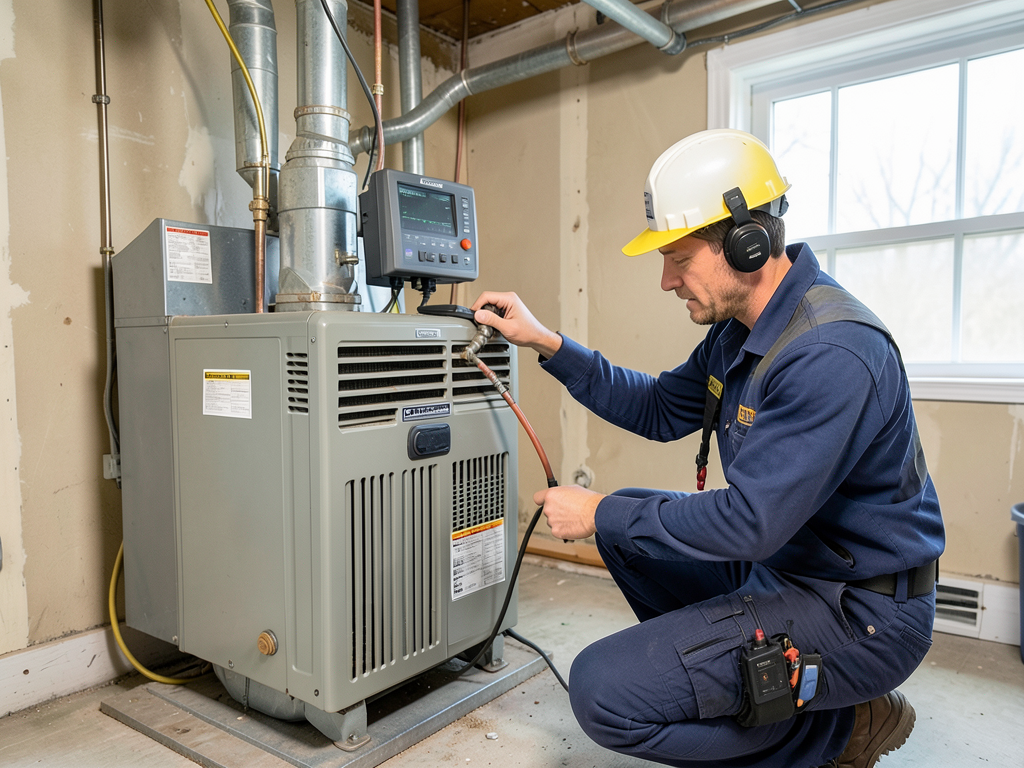
Diagnostic testing for heat exchanger cracks requires specialized equipment. Technicians use combustion analyzers to measure oxygen and carbon monoxide levels in the flue gases. Elevated CO readings or flame rollout indicate potential cracks that require immediate attention.
Other warning signs include yellow or flickering burner flames instead of steady blue flames, soot accumulation around the furnace, and unusual noises like rattling or popping. These symptoms often indicate combustion problems that compromise both efficiency and safety.
Carbon monoxide detectors should be installed on every level of your Bustleton home, particularly near sleeping areas. Pennsylvania law requires CO detectors in all dwellings with fuel-burning appliances, and many local fire departments offer free testing services.
Energy Efficiency and Monthly Savings Analysis
Modern high-efficiency furnaces can reduce your heating costs by 20-30% compared to a 15-year-old unit. For a typical Bustleton split level home, this translates to annual savings of $300-$500 on your heating bill, depending on your home’s size and insulation quality.
Variable-speed blowers in new furnaces provide additional benefits beyond energy savings. These motors adjust their speed based on heating demand, eliminating the temperature swings common in older single-stage furnaces. This results in more consistent comfort throughout your home’s multiple levels. Energy Star certified furnaces.
Two-stage heating is another feature worth considering. Instead of running at full capacity every time heat is needed, a two-stage furnace operates at a lower, more efficient level for mild conditions and only switches to high heat during extreme cold. This reduces wear and tear while maintaining better humidity control.
Energy Star certified furnaces meet strict efficiency guidelines set by the EPA. These units typically feature advanced heat exchangers, electronic ignition systems, and sealed combustion chambers that maximize heat transfer while minimizing energy waste.
Philadelphia Utility Rebates and Tax Credits
Philadelphia area homeowners can access substantial financial incentives for upgrading to high-efficiency heating systems. PECO’s Smart Ideas program offers rebates of $300-$500 for qualifying high-efficiency furnaces with AFUE ratings of 95% or higher.
PGW’s EnergySense program provides additional rebates for customers who convert from older, less efficient heating systems to modern gas furnaces. These programs can reduce the upfront cost of replacement by $500 or more, making the investment more accessible for many families.
The federal Energy Efficient Home Improvement Credit allows you to claim 30% of the cost of qualifying HVAC equipment, up to $2,000, on your federal taxes. This credit applies to both the equipment and installation costs for high-efficiency furnaces that meet specific energy performance criteria.
Philadelphia’s Property Assessed Clean Energy (PACE) program offers financing options for energy efficiency improvements, including HVAC upgrades. This allows you to spread the cost over time while immediately benefiting from lower energy bills. HVAC Financing & Rebates.
Cost Comparison: Repair vs. Replacement Investment
| Option | 1-2 Year Cost | 5 Year Cost | 10 Year Cost |
|---|---|---|---|
| Continue Repairs | $800 – $1,500 | $3,000 – $5,000 | $6,000 – $10,000 |
| Replace with Standard Efficiency | $3,500 – $5,000 | $4,000 – $5,500 | $4,500 – $6,000 |
| Replace with High Efficiency | $4,500 – $6,500 | $3,500 – $4,500 | $3,000 – $4,000 |
Installation Considerations for Bustleton Split Level Homes
Bustleton’s split level homes present unique installation challenges that affect both cost and complexity. These homes typically feature multiple HVAC zones, requiring careful system design to ensure balanced airflow throughout all levels.
The Philadelphia area’s clay-based soil can affect foundation stability, particularly in older split level homes. This may require additional support or modifications during furnace installation, especially if the unit is located in a basement or crawl space.
Many Bustleton homes were built during the 1970s and 1980s when building codes were different. Modern high-efficiency furnaces often require updated venting systems that may not align with existing configurations, potentially increasing installation costs.
Space constraints in split level homes can limit your equipment options. High-efficiency furnaces are typically larger than standard models due to additional heat exchanger chambers and blower components. Your technician may need to modify existing spaces or relocate the furnace to accommodate newer technology.
Diagnostic Testing: What Your Technician Should Check
Professional HVAC technicians use specific diagnostic procedures to evaluate your furnace’s condition. These tests help determine whether repair or replacement makes more sense for your particular situation.
Combustion analysis measures the efficiency of your furnace’s fuel burning process. Technicians use handheld analyzers to check oxygen levels, carbon monoxide production, and stack temperature. Readings outside manufacturer specifications indicate declining efficiency and potential safety issues.
Static pressure testing evaluates your system’s airflow. High static pressure readings suggest ductwork restrictions or blower motor problems that reduce efficiency and comfort. This test is particularly important in split level homes where airflow balancing is critical.
Heat exchanger inspection involves visual examination and sometimes infrared scanning to detect cracks or corrosion. Even small cracks can allow dangerous gases to escape, making this one of the most critical safety checks your technician performs.
Electrical testing includes checking capacitor performance, verifying proper voltage to all components, and testing safety controls. Electrical failures are common in 15-year-old furnaces and can cause intermittent operation or complete system shutdowns.
Financing Options for Furnace Replacement
Understanding your financing options can make the decision to replace your furnace less daunting. Many Philadelphia HVAC contractors offer flexible payment plans that allow you to spread the cost over 12-60 months. Best Rated HVAC Contractors in the Main Line Area.
0% interest promotional financing is often available for qualified buyers, particularly during off-season periods when contractors are less busy. These promotions can make high-efficiency systems more affordable by eliminating interest charges for the promotional period.
Home equity loans or lines of credit typically offer lower interest rates than personal loans or credit cards. For homeowners with significant equity in their Bustleton properties, this can be an economical way to finance a furnace replacement.
Some utility companies offer on-bill financing, allowing you to pay for energy efficiency improvements through your monthly utility bill. The payments are often structured so that your energy savings offset the additional cost, resulting in no net increase to your monthly expenses.
Environmental Impact and Sustainability
Replacing an old furnace isn’t just about personal comfort and savings—it’s also an environmental decision. High-efficiency furnaces produce fewer greenhouse gas emissions per unit of heat delivered compared to older models.
A 96% efficient furnace emits approximately 20% less carbon dioxide than a 70% efficient model over its lifetime. For the average Philadelphia home, this reduction can be equivalent to taking a small car off the road for a year.
Modern furnaces also produce fewer air pollutants, including nitrogen oxides and particulate matter. This improves local air quality, particularly important in urban areas like Philadelphia where air quality can already be compromised by vehicle emissions and industrial activity.
Smart thermostats, often included with new furnace installations, can further reduce energy consumption by learning your schedule and adjusting temperatures automatically. These devices can save an additional 10-15% on heating costs while improving comfort.
Making Your Decision: The Final Checklist
Before making your final decision, consider these key factors specific to your Bustleton split level home:
- Calculate your total repair costs over the past two years
- Determine if repair costs exceed 50% of replacement cost
- Check for any safety warning signs like carbon monoxide detector alerts
- Evaluate your energy bills compared to similar homes in your area
- Research available rebates and tax credits in Philadelphia
- Consider your long-term plans for the home
- Get multiple quotes from licensed Philadelphia HVAC contractors
The age of 15 years is a critical milestone for furnaces. While some units last longer, the combination of declining efficiency, increasing repair frequency, and potential safety issues makes this a logical point for evaluation.
Your decision ultimately depends on your specific circumstances, but understanding these factors will help you make an informed choice that balances cost, comfort, and safety for your Bustleton home.
Frequently Asked Questions
How long does a typical furnace replacement take in a split level home?
Most furnace replacements in split level homes can be completed in one day by experienced technicians. However, complex installations involving ductwork modifications or venting changes may require two days. Your contractor should provide a specific timeline after evaluating your home’s unique requirements.
Can I install a high-efficiency furnace in my older Bustleton home?
Yes, high-efficiency furnaces can be installed in most older homes, but they may require additional modifications. These might include upgraded venting systems, condensate drain lines, or electrical service improvements. A professional assessment will identify any necessary changes and their associated costs.
What size furnace do I need for my split level home?
Furnace sizing depends on your home’s square footage, insulation quality, window efficiency, and local climate. A Manual J load calculation performed by your HVAC contractor will determine the exact BTU requirements for your specific home. Oversized furnaces waste energy and create comfort issues, while undersized units struggle to maintain temperatures.
Are there any Philadelphia-specific permits required for furnace replacement?
Yes, Philadelphia requires permits for furnace replacement to ensure compliance with local building codes and safety standards. Your HVAC contractor should handle permit acquisition as part of their service. The inspection process helps verify that your new system meets all local requirements for safety and efficiency.
Call (215) 610-9099 today to schedule your professional furnace evaluation. Our experienced technicians will assess your current system, discuss your options, and help you make the right decision for your Bustleton split level home. Don’t wait until your furnace fails completely—take control of your home comfort and energy costs now.
Pick up the phone and call (215) 610-9099 before the next cold snap hits. We offer emergency service, free estimates, and expert guidance to help you choose the best heating solution for your family’s needs and budget. Expert Boiler Repair and Maintenance for Historic Homes in Chestnut Hill and Mt Airy.
{
“@context”: “https://schema.org”,
“@type”: “BlogPosting”,
“headline”: “Should You Keep Repairing or Just Replace That 15 Year Old Furnace in Your Bustleton Split Level Home”,
“description”: “Deciding whether to repair or replace your 15-year-old furnace in Bustleton? Learn about repair costs, energy savings, safety risks, and local rebates to make the right choice.”,
“wordCount”: 2136,
“datePublished”: “2026-06-14T11:30:00.000Z”,
“dateModified”: “2026-06-14T11:30:00.000Z”,
“inLanguage”: “en-US”,
“mainEntityOfPage”: {
“@type”: “WebPage”,
“@id”: “https://elitehvacphiladelphia.com”
},
“publisher”: {
“@type”: “LocalBusiness”,
“name”: “Elite HVAC Philadelphia”,
“url”: “https://elitehvacphiladelphia.com”
},
“author”: {
“@type”: “Organization”,
“name”: “Elite HVAC Philadelphia”,
“url”: “https://elitehvacphiladelphia.com”
},
“image”: {
“@type”: “ImageObject”,
“url”: “https://elitehvacphiladelphia.com/wp-content/uploads/2026/03/should-you-keep-repairing-or-just-replace-that-15-1.png”
}
}
{
“@context”: “https://schema.org”,
“@type”: “HVACBusiness”,
“name”: “Elite HVAC Philadelphia”,
“url”: “https://elitehvacphiladelphia.com”,
“address”: {
“@type”: “PostalAddress”,
“addressLocality”: “Philadelphia”
},
“areaServed”: {
“@type”: “City”,
“name”: “Philadelphia”
}
}
{
“@context”: “https://schema.org”,
“@type”: “FAQPage”,
“mainEntity”: [
{
“@type”: “Question”,
“name”: “How long does a typical furnace replacement take in a split level home?”,
“acceptedAnswer”: {
“@type”: “Answer”,
“text”: “Most furnace replacements in split level homes can be completed in one day by experienced technicians. However, complex installations involving ductwork modifications or venting changes may require two days. Your contractor should provide a specific timeline after evaluating your home’s unique requirements.”
}
},
{
“@type”: “Question”,
“name”: “Can I install a high-efficiency furnace in my older Bustleton home?”,
“acceptedAnswer”: {
“@type”: “Answer”,
“text”: “Yes, high-efficiency furnaces can be installed in most older homes, but they may require additional modifications. These might include upgraded venting systems, condensate drain lines, or electrical service improvements. A professional assessment will identify any necessary changes and their associated costs.”
}
},
{
“@type”: “Question”,
“name”: “What size furnace do I need for my split level home?”,
“acceptedAnswer”: {
“@type”: “Answer”,
“text”: “Furnace sizing depends on your home’s square footage, insulation quality, window efficiency, and local climate. A Manual J load calculation performed by your HVAC contractor will determine the exact BTU requirements for your specific home. Oversized furnaces waste energy and create comfort issues, while undersized units struggle to maintain temperatures.”
}
},
{
“@type”: “Question”,
“name”: “Are there any Philadelphia-specific permits required for furnace replacement?”,
“acceptedAnswer”: {
“@type”: “Answer”,
“text”: “Yes, Philadelphia requires permits for furnace replacement to ensure compliance with local building codes and safety standards. Your HVAC contractor should handle permit acquisition as part of their service. The inspection process helps verify that your new system meets all local requirements for safety and efficiency.”
}
}
]
}
{
“@context”: “https://schema.org”,
“@type”: “BreadcrumbList”,
“itemListElement”: [
{
“@type”: “ListItem”,
“position”: 1,
“name”: “Home”,
“item”: “https://elitehvacphiladelphia.com”
},
{
“@type”: “ListItem”,
“position”: 2,
“name”: “Blog”,
“item”: “https://elitehvacphiladelphia.com/blog”
},
{
“@type”: “ListItem”,
“position”: 3,
“name”: “Should You Keep Repairing or Just Replace That 15 Year Old Furnace in Your Bustleton Split Level Home”
}
]
}
{
“@context”: “https://schema.org”,
“@type”: “Service”,
“serviceType”: “HVAC”,
“provider”: {
“@type”: “LocalBusiness”,
“name”: “Elite HVAC Philadelphia”,
“url”: “https://elitehvacphiladelphia.com”
},
“areaServed”: {
“@type”: “City”,
“name”: “Philadelphia”
},
“description”: “Deciding whether to repair or replace your 15-year-old furnace in Bustleton? Learn about repair costs, energy savings, safety risks, and local rebates to make the right choice.”
}