
Protecting Your HVAC Equipment from Flash Flooding in Eastwick and Southwest Philly
Flash flooding in Eastwick and Southwest Philadelphia poses a serious threat to HVAC systems. When the Schuylkill River overflows or heavy rains overwhelm storm drains, water can quickly reach mechanical rooms and outdoor units. The good news is that you can take specific steps to protect your equipment and minimize damage before the next storm hits.. Read more about Why Your Furnace is Leaking Water on Your Oxford Circle Basement Floor.
This guide covers elevation strategies, flood prevention hardware, emergency shutdown procedures, and post-flood recovery steps tailored to Philadelphia’s unique flood risks. We’ll also discuss local building codes and permit requirements for equipment placement in flood-prone zones. Emergency AC Repair in Fishtown (Fast Service When the Heat Hits).
Why Eastwick and Southwest Philly Are High-Risk Areas for HVAC Flooding
Eastwick sits in a low-lying area near the confluence of the Schuylkill and Delaware rivers. The neighborhood’s proximity to water and flat terrain makes it particularly vulnerable when heavy rainfall overwhelms drainage systems. Many homes in this area have basements with HVAC equipment installed at or below ground level.
Southwest Philadelphia faces similar challenges. The area’s aging infrastructure and combined sewer systems can back up quickly during intense storms. Properties near Cobbs Creek and the Schuylkill River are especially at risk when water levels rise.
Philadelphia Water Department data shows that Eastwick and surrounding Southwest neighborhoods experience more frequent and severe flooding than other parts of the city. This makes flood protection for HVAC systems not just a good idea but a necessary investment. EPA Mold Guidelines.
Essential HVAC Flood Prevention Strategies
Protecting your HVAC equipment starts with understanding the most effective prevention methods. Here are the key strategies that work best in Philadelphia’s flood-prone areas.
Equipment Elevation and Platform Construction
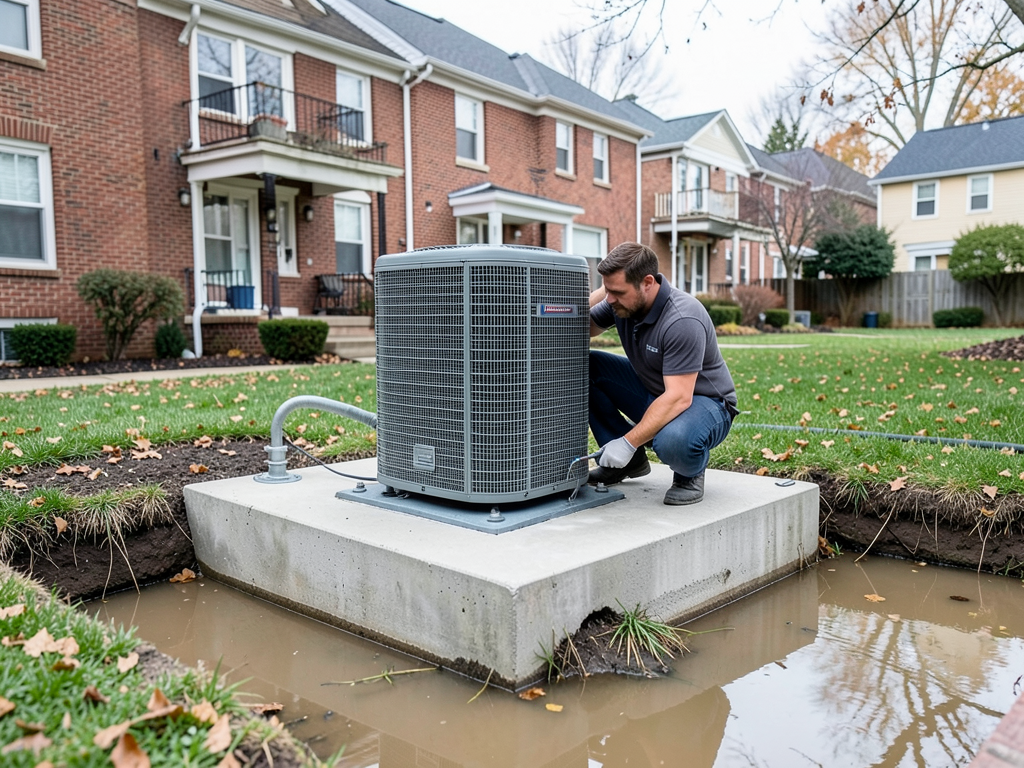
Raising your HVAC equipment above potential flood levels is the most effective protection method. For outdoor condenser units, a concrete pad elevated at least 12 inches above the highest recorded flood level provides solid protection. In Eastwick, where flood records show water levels reaching 24 inches in some storms, a 30-inch elevation is recommended.
Indoor equipment like furnaces and air handlers require different approaches. If your mechanical room is in the basement, consider building a raised platform or relocating the unit to the first floor. The platform should be constructed with pressure-treated lumber and marine-grade plywood to withstand moisture exposure.
Heat pumps and air handlers can be mounted on wall brackets in some cases, keeping them completely above flood levels. This solution works well in finished basements where floor space is limited.
Automatic Shut-Off Systems and Water Sensors
Installing automatic shut-off switches provides an additional layer of protection. These devices use water sensors placed around your HVAC equipment. When water is detected, the system automatically cuts power to the unit, preventing electrical damage and reducing fire hazards. The True Cost of Installing Central Air in an Older South Philly Rowhome.
Modern float switches can be integrated with your HVAC control panel. They monitor condensate drain lines and main equipment areas. When water reaches a dangerous level, the switch triggers an alarm and shuts down the system. Best Rated HVAC Contractors in the Main Line Area.
Some advanced systems include cellular connectivity, sending text alerts when water is detected. This allows you to respond quickly even when you’re away from home.
Waterproof Bases and Barriers
Creating a waterproof barrier around your HVAC equipment can prevent minor flooding from causing major damage. Concrete masonry units (CMUs) can be arranged to form a protective wall around outdoor units. The wall should be sealed with waterproofing compound and extend at least 6 inches above the surrounding ground level.
For indoor equipment, consider installing a secondary drain pan with a built-in float switch. This pan catches water from condensate lines or minor leaks and activates the shut-off switch before flooding occurs.
Door dams and flood barriers can be installed at basement entrances. These removable barriers create a watertight seal when deployed before a storm.
Philadelphia Building Codes and Compliance Requirements
Philadelphia’s building codes address HVAC equipment placement in flood-prone areas. The Philadelphia Department of Licenses and Inspections (L&I) requires that mechanical equipment in flood zones be elevated or protected according to Federal Emergency Management Agency (FEMA) guidelines. FEMA Flood Maps.
According to Philadelphia Code Chapter 11-401, HVAC equipment in Special Flood Hazard Areas must be installed above the base flood elevation (BFE). The BFE is determined by FEMA flood maps and varies by location. In Eastwick, the BFE ranges from 6 to 12 feet above sea level depending on the specific flood zone.
Permit requirements for equipment elevation work vary by project scope. Simple pad installations may not require permits, but structural modifications or equipment relocation typically do. Always check with L&I before beginning any flood protection project.
The Philadelphia Water Department also has requirements for stormwater management. Any changes to grading or drainage patterns must comply with PWD regulations to prevent water from being directed onto neighboring properties.
Emergency Shutdown Checklist for Homeowners
When a flood warning is issued for Philadelphia, you need to act quickly to protect your HVAC system. Here’s a step-by-step emergency shutdown procedure:
- Turn Off Power at Breaker Panel
Locate your HVAC circuit breaker and switch it to the OFF position. This prevents electrical damage and reduces fire risk. Weak Airflow from Vents.
- Close Gas Supply Valves
If you have gas-fired equipment, turn the gas shut-off valve to the closed position to prevent gas leaks.
- Clear Area Around Outdoor Units
Remove any loose objects that could become projectiles in high winds. Secure outdoor furniture and decorations.
- Document Equipment Location
Take photos of your HVAC equipment and its surroundings for insurance purposes.
- Prepare for Evacuation
If you must leave, turn off your main water supply to prevent additional flooding from burst pipes.
Keep this checklist in an easily accessible location and review it with all household members. Practice the shutdown procedure so everyone knows what to do when time is critical.
Post-Flood HVAC Inspection and Recovery
After flood waters recede, your HVAC system needs professional inspection before it can be safely operated. Never attempt to restart flooded equipment yourself.
A qualified technician will perform a comprehensive assessment including:
- Electrical component testing for shorts and corrosion
- Motor and bearing inspection for water damage
- Refrigerant line pressure testing for leaks
- Ductwork inspection for contamination and structural damage
- Control board evaluation for moisture damage
The inspection process typically takes 2-4 hours depending on system complexity. If damage is found, the technician will provide a detailed report with repair recommendations and cost estimates.
Some components may need replacement rather than repair. Control boards, motors, and electrical wiring are often damaged beyond economical repair by flood exposure. Refrigerant lines should be pressure tested and may need replacement if contamination is suspected.
Mold Prevention in Post-Flood HVAC Systems
Philadelphia’s humid climate creates ideal conditions for mold growth in flood-damaged HVAC systems. Within 24-48 hours of water exposure, mold can begin colonizing damp components.
Professional mold remediation for HVAC systems includes:
- Complete system cleaning with antimicrobial agents
- Ductwork inspection and cleaning or replacement
- Filter replacement with high-efficiency particulate air (HEPA) filters
- Coil cleaning and disinfection
- Condensate drain line flushing
EPA guidelines recommend replacing porous components that cannot be thoroughly cleaned and disinfected. This often includes fiberglass insulation in air handlers and flexible ductwork.
Preventive measures after flood recovery include installing UV light systems in air handlers to kill mold spores and bacteria. These systems provide ongoing protection against future contamination.
Cost Comparison: Prevention vs. Recovery
Investing in flood prevention is significantly less expensive than recovering from flood damage. Here’s a comparison of typical costs:
| Service | Prevention Cost | Recovery Cost |
|---|---|---|
| Equipment Elevation | $800 – $2,500 | $3,000 – $8,000 |
| Automatic Shut-Off System | $300 – $600 | $1,500 – $4,000 |
| Waterproof Barriers | $200 – $800 | $2,000 – $6,000 |
| Full System Replacement | $0 | $5,000 – $15,000 |
These costs vary based on system size, equipment type, and flood severity. However, the prevention costs represent a small fraction of potential recovery expenses.
Insurance Considerations for Flood-Prone Areas
Standard homeowners insurance policies typically don’t cover flood damage. If you live in Eastwick or other flood-prone areas of Southwest Philadelphia, you may need separate flood insurance through the National Flood Insurance Program (NFIP).
NFIP policies cover structural damage to your home and mechanical systems, including HVAC equipment. However, coverage limits and deductibles vary by policy. Some homeowners opt for additional coverage to protect against the high costs of system replacement.
When filing a claim for flood-damaged HVAC equipment, documentation is crucial. Keep records of all maintenance, repairs, and flood protection upgrades. Photos of equipment before and after flooding provide valuable evidence for insurance adjusters.
Some insurance companies offer premium discounts for homes with flood protection measures installed. Automatic shut-off systems, elevated equipment, and waterproof barriers may qualify for these discounts.
Long-Term Solutions for Flood-Prone Properties
For homeowners in Eastwick and Southwest Philadelphia who experience repeated flooding, more comprehensive solutions may be necessary. These long-term strategies address the root causes of flooding rather than just protecting equipment.
Basement waterproofing can significantly reduce flood risk. This process involves installing interior and exterior drainage systems, applying waterproof coatings to foundation walls, and installing sump pumps with battery backup.
Grading improvements direct water away from your home’s foundation. This may involve regrading your yard, installing French drains, or creating swales to channel water to appropriate drainage areas.
Rain gardens and permeable pavement reduce stormwater runoff. These green infrastructure solutions absorb rainwater where it falls, reducing the burden on municipal drainage systems during heavy storms.
For properties with severe, recurring flooding, elevating the entire structure may be worth considering. While expensive, this solution can eliminate flood damage entirely and may be partially funded through FEMA mitigation grants.
Choosing the Right HVAC Contractor for Flood Protection
Not all HVAC contractors have experience with flood protection and mitigation. When selecting a contractor for flood-related work, look for these qualifications:
- Experience with Philadelphia’s flood zones and building codes
- Proper licensing and insurance coverage
- Knowledge of FEMA and NFIP requirements
- Experience with equipment elevation and waterproofing
- Ability to coordinate with other trades for comprehensive solutions
Ask potential contractors about their experience with similar projects in Eastwick and Southwest Philadelphia. Request references from homeowners who have had flood protection work completed.
A qualified contractor should provide a detailed proposal including equipment specifications, elevation heights, and compliance documentation. They should also explain the permitting process and handle permit applications on your behalf.
Maintenance and Testing of Flood Protection Systems
Installing flood protection equipment is only the first step. Regular maintenance ensures these systems will function when you need them most.
Schedule annual inspections of your flood protection systems. This should include testing water sensors, checking float switches, inspecting waterproof seals, and verifying that all components are functioning properly.
Test your automatic shut-off system quarterly by manually triggering the water sensors. This ensures the system responds correctly and gives you confidence in its reliability.
Clean debris from around outdoor equipment and check that drainage paths remain clear. Even small obstructions can prevent water from flowing away from your equipment during heavy rains.
Replace batteries in backup systems and alarms annually. Many flood protection failures occur due to dead batteries in critical components.
Frequently Asked Questions
How high should I elevate my HVAC equipment in Eastwick?
Based on FEMA flood maps and Philadelphia building codes, equipment in Eastwick should be elevated at least 12 inches above the highest recorded flood level for your specific location. Some areas may require elevation of 24 inches or more. A qualified contractor can determine the exact requirement for your property.
Will flood protection measures void my HVAC warranty?
Properly installed flood protection measures should not void your HVAC warranty. However, modifications to equipment or installation by non-certified technicians might. Always check with your equipment manufacturer before making changes, and use certified contractors for all work.
How long does it take to install flood protection for HVAC equipment?
Most flood protection installations can be completed in one to three days. Simple pad elevation might take a few hours, while comprehensive systems with sensors and barriers could require multiple days. Emergency installations before an approaching storm may be completed more quickly.
Can I install flood protection myself?
While some basic measures like clearing debris can be DIY projects, most flood protection work requires professional expertise. Electrical connections for sensors and shut-off systems must be done by licensed electricians. Equipment elevation often requires permits and must comply with building codes. Expert Boiler Repair and Maintenance for Historic Homes in Chestnut Hill and Mt Airy.
What should I do if my HVAC system was flooded?
Never attempt to operate flooded HVAC equipment. Turn off power at the breaker panel and contact a licensed HVAC contractor immediately. The system needs professional inspection before it can be safely operated. Operating flooded equipment can cause further damage and create safety hazards.
Are there financial assistance programs for flood protection in Philadelphia?
Philadelphia offers various programs for flood mitigation, including the Basement Protection Program and Community Flood Mitigation Program. These programs may provide funding or low-interest loans for flood protection measures. Contact the Philadelphia Water Department for current program availability and eligibility requirements.
Take Action Before the Next Storm
Flash flooding in Eastwick and Southwest Philadelphia is not a question of if, but when. The damage to unprotected HVAC equipment can be catastrophic, leaving you without heating or cooling for weeks or months while repairs are completed.
Don’t wait for the next storm warning to start thinking about protection. Call (215) 610-9099 today to schedule a flood risk assessment for your HVAC system. Our experienced technicians understand Philadelphia’s unique flood challenges and can recommend the most effective protection strategies for your specific situation.
Pick up the phone and call (215) 610-9099 before the next storm hits. Protect your investment, ensure your family’s comfort, and gain peace of mind knowing your HVAC system is ready for whatever weather Philadelphia throws our way.
Emergency Service Available 24/7 – When flooding occurs, we’re ready to help with rapid response and expert recovery services throughout Eastwick, Southwest Philadelphia, and all surrounding areas.
{
“@context”: “https://schema.org”,
“@type”: “BlogPosting”,
“headline”: “Protecting Your HVAC Equipment from Flash Flooding in Eastwick and Southwest Philly”,
“description”: “Learn how to protect your HVAC system from flash flooding in Eastwick and Southwest Philly with elevation strategies, flood prevention, and emergency protocols specific to Philadelphia’s flood zones.”,
“wordCount”: 2350,
“datePublished”: “2026-05-17T07:35:00.000Z”,
“dateModified”: “2026-05-17T07:35:00.000Z”,
“inLanguage”: “en-US”,
“mainEntityOfPage”: {
“@type”: “WebPage”,
“@id”: “https://elitehvacphiladelphia.com”
},
“publisher”: {
“@type”: “LocalBusiness”,
“name”: “Elite HVAC Philadelphia”,
“url”: “https://elitehvacphiladelphia.com”
},
“author”: {
“@type”: “Organization”,
“name”: “Elite HVAC Philadelphia”,
“url”: “https://elitehvacphiladelphia.com”
},
“image”: {
“@type”: “ImageObject”,
“url”: “https://elitehvacphiladelphia.com/wp-content/uploads/2026/03/protecting-your-hvac-equipment-from-flash-flooding-1.png”
}
}
{
“@context”: “https://schema.org”,
“@type”: “HVACBusiness”,
“name”: “Elite HVAC Philadelphia”,
“url”: “https://elitehvacphiladelphia.com”,
“address”: {
“@type”: “PostalAddress”,
“addressLocality”: “Philadelphia”
},
“areaServed”: {
“@type”: “City”,
“name”: “Philadelphia”
}
}
{
“@context”: “https://schema.org”,
“@type”: “FAQPage”,
“mainEntity”: [
{
“@type”: “Question”,
“name”: “How high should I elevate my HVAC equipment in Eastwick?”,
“acceptedAnswer”: {
“@type”: “Answer”,
“text”: “Based on FEMA flood maps and Philadelphia building codes, equipment in Eastwick should be elevated at least 12 inches above the highest recorded flood level for your specific location. Some areas may require elevation of 24 inches or more. A qualified contractor can determine the exact requirement for your property.”
}
},
{
“@type”: “Question”,
“name”: “Will flood protection measures void my HVAC warranty?”,
“acceptedAnswer”: {
“@type”: “Answer”,
“text”: “Properly installed flood protection measures should not void your HVAC warranty. However, modifications to equipment or installation by non-certified technicians might. Always check with your equipment manufacturer before making changes, and use certified contractors for all work.”
}
},
{
“@type”: “Question”,
“name”: “How long does it take to install flood protection for HVAC equipment?”,
“acceptedAnswer”: {
“@type”: “Answer”,
“text”: “Most flood protection installations can be completed in one to three days. Simple pad elevation might take a few hours, while comprehensive systems with sensors and barriers could require multiple days. Emergency installations before an approaching storm may be completed more quickly.”
}
},
{
“@type”: “Question”,
“name”: “Can I install flood protection myself?”,
“acceptedAnswer”: {
“@type”: “Answer”,
“text”: “While some basic measures like clearing debris can be DIY projects, most flood protection work requires professional expertise. Electrical connections for sensors and shut-off systems must be done by licensed electricians. Equipment elevation often requires permits and must comply with building codes. Expert Boiler Repair and Maintenance for Historic Homes in Chestnut Hill and Mt Airy.”
}
},
{
“@type”: “Question”,
“name”: “What should I do if my HVAC system was flooded?”,
“acceptedAnswer”: {
“@type”: “Answer”,
“text”: “Never attempt to operate flooded HVAC equipment. Turn off power at the breaker panel and contact a licensed HVAC contractor immediately. The system needs professional inspection before it can be safely operated. Operating flooded equipment can cause further damage and create safety hazards.”
}
},
{
“@type”: “Question”,
“name”: “Are there financial assistance programs for flood protection in Philadelphia?”,
“acceptedAnswer”: {
“@type”: “Answer”,
“text”: “Philadelphia offers various programs for flood mitigation, including the Basement Protection Program and Community Flood Mitigation Program. These programs may provide funding or low-interest loans for flood protection measures. Contact the Philadelphia Water Department for current program availability and eligibility requirements.”
}
}
]
}
{
“@context”: “https://schema.org”,
“@type”: “HowTo”,
“name”: “Emergency HVAC Shutdown”,
“step”: [
{
“@type”: “HowToStep”,
“position”: 1,
“name”: “Turn Off Power at Breaker Panel”,
“text”: “Locate your HVAC circuit breaker and switch it to the OFF position. This prevents electrical damage and reduces fire risk. Weak Airflow from Vents.”
},
{
“@type”: “HowToStep”,
“position”: 2,
“name”: “Close Gas Supply Valves”,
“text”: “If you have gas-fired equipment, turn the gas shut-off valve to the closed position to prevent gas leaks.”
},
{
“@type”: “HowToStep”,
“position”: 3,
“name”: “Clear Area Around Outdoor Units”,
“text”: “Remove any loose objects that could become projectiles in high winds. Secure outdoor furniture and decorations.”
},
{
“@type”: “HowToStep”,
“position”: 4,
“name”: “Document Equipment Location”,
“text”: “Take photos of your HVAC equipment and its surroundings for insurance purposes.”
},
{
“@type”: “HowToStep”,
“position”: 5,
“name”: “Prepare for Evacuation”,
“text”: “If you must leave, turn off your main water supply to prevent additional flooding from burst pipes.”
}
],
“image”: “https://elitehvacphiladelphia.com/wp-content/uploads/2026/03/protecting-your-hvac-equipment-from-flash-flooding-1.png”
}
{
“@context”: “https://schema.org”,
“@type”: “BreadcrumbList”,
“itemListElement”: [
{
“@type”: “ListItem”,
“position”: 1,
“name”: “Home”,
“item”: “https://elitehvacphiladelphia.com”
},
{
“@type”: “ListItem”,
“position”: 2,
“name”: “Blog”,
“item”: “https://elitehvacphiladelphia.com/blog”
},
{
“@type”: “ListItem”,
“position”: 3,
“name”: “Protecting Your HVAC Equipment from Flash Flooding in Eastwick and Southwest Philly”
}
]
}
{
“@context”: “https://schema.org”,
“@type”: “Service”,
“serviceType”: “HVAC”,
“provider”: {
“@type”: “LocalBusiness”,
“name”: “Elite HVAC Philadelphia”,
“url”: “https://elitehvacphiladelphia.com”
},
“areaServed”: {
“@type”: “City”,
“name”: “Philadelphia”
},
“description”: “Learn how to protect your HVAC system from flash flooding in Eastwick and Southwest Philly with elevation strategies, flood prevention, and emergency protocols specific to Philadelphia’s flood zones.”
}