
How to Stop Your AC from Vibrating Against Your Neighbor’s Wall in Society Hill
Living in Society Hill means dealing with historic rowhomes that sit shoulder-to-shoulder on narrow streets. When your outdoor AC unit starts vibrating, that noise doesn’t just stay in your backyard—it travels through brick walls and into your neighbor’s living space. The good news is that you can fix this problem with the right approach and equipment.
The first step is understanding what causes the vibration. Most outdoor AC units have compressors that run at high speeds. When these units are placed too close to shared walls or mounted on unstable surfaces, the vibration transfers directly into the building structure. In Society Hill’s tight urban layout, this creates a noise problem that affects both you and your neighbors.
Before we dive into solutions, it’s worth noting that Philadelphia’s building codes require proper equipment installation to prevent nuisance conditions. According to Philadelphia Code Section 9-1102, HVAC equipment must be installed to minimize noise and vibration that could disturb adjacent properties. This means taking action isn’t just neighborly—it’s legally required. Philadelphia Building Codes.
Common Causes of AC Vibration in Society Hill Homes
The historic nature of Society Hill rowhomes creates unique challenges for AC installation. Many units were retrofitted into buildings not designed for modern HVAC systems. Here are the most common vibration sources:
- Unlevel mounting surfaces that cause the unit to rock during operation
- Missing or worn vibration isolation pads under the compressor
- Loose mounting brackets that allow metal-on-metal contact
- Direct contact between the unit and brick or masonry walls
- Improperly secured refrigerant lines that transmit vibration
The tight alleyways in Society Hill also amplify sound. When noise bounces off brick walls, it can seem louder than it actually is. This is why even a properly functioning unit can cause complaints if not properly isolated.
Diagnostic Test: Finding Your Vibration Source
Before investing in solutions, you need to identify the specific vibration source. Here’s a simple diagnostic test our technicians use:
Turn on your AC and listen carefully. Place your hand on different parts of the unit while it’s running. You should feel vibration in the compressor area, but excessive vibration elsewhere indicates a problem. Check the mounting pads—if they feel soft or compressed, they need replacement.
Also inspect the mounting brackets. Loose bolts will rattle during operation. You can often fix this by tightening hardware or adding rubber washers to create a buffer between metal parts.
Effective Solutions for AC Vibration in Society Hill
Anti-Vibration Pads and Mounts
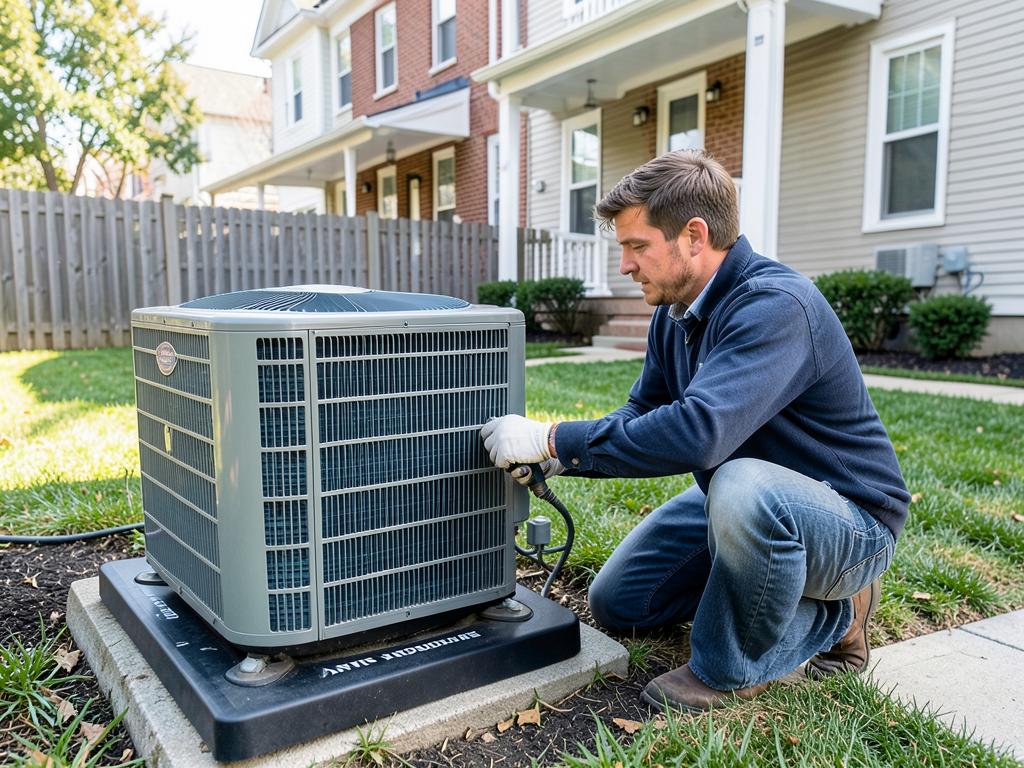
The most cost-effective solution is installing anti-vibration pads under your AC unit. These rubber or neoprene pads absorb vibration before it reaches your home’s structure. For Society Hill’s brick rowhomes, we recommend pads that are at least 1-inch thick with a durometer rating between 50-70 Shore A. The True Cost of Installing Central Air in an Older South Philly Rowhome.
Installation is straightforward: place the pads under each corner of the unit, ensuring they’re level. This simple upgrade can reduce vibration transmission by 60-80%.
Sound Barriers and Fencing
When space allows, installing a sound barrier between your unit and your neighbor’s wall can dramatically reduce noise complaints. A simple wooden fence with sound-absorbing materials can block and absorb vibration energy.
For Society Hill’s narrow spaces, consider a vinyl or composite barrier that won’t rot in Philadelphia’s humid climate. These materials also provide better sound dampening than wood alone. HVAC Philadelphia.
Compressor Isolation Kits
Professional-grade compressor isolation kits include specialized rubber mounts that replace standard hardware. These kits are designed specifically for HVAC equipment and can reduce vibration by up to 90%.
The installation involves removing the compressor from its frame and mounting it on rubber isolation feet. This prevents direct metal contact and stops vibration at its source. Weak Airflow from Vents.
Comparing Vibration Reduction Solutions
| Solution Type | Cost Range | Effectiveness | Installation Difficulty |
|---|---|---|---|
| Anti-Vibration Pads | $50-$150 | 60-80% | DIY-friendly |
| Sound Barriers | $200-$800 | 70-85% | Moderate |
| Compressor Isolation Kits | $300-$600 | 85-90% | Professional |
| Complete Unit Replacement | $3,000-$8,000 | 90-95% | Professional |
DIY vs Professional Installation
Simple solutions like anti-vibration pads can be installed by most homeowners. However, more complex fixes require professional expertise. Here’s when to call a professional: Expert Boiler Repair and Maintenance for Historic Homes in Chestnut Hill and Mt Airy.
- Your unit is over 10 years old and showing other signs of wear
- You’re uncomfortable working with electrical components
- The mounting surface needs structural modification
- You need to comply with Philadelphia building codes
Professional installation ensures your solution meets local code requirements and won’t void your equipment warranty. In Society Hill, where historic preservation is important, professionals also understand how to make modifications without damaging original structures.
Preventing Future Vibration Issues
Once you’ve solved your current vibration problem, maintenance is key to preventing it from returning. Schedule annual HVAC maintenance that includes checking all mounting hardware and vibration isolation components.
Also consider upgrading to a newer, quieter unit if yours is over 10 years old. Modern AC units use variable-speed compressors that operate more smoothly and produce less vibration than older single-speed models.
Call to Action
If your AC is vibrating against your neighbor’s wall in Society Hill, don’t wait for complaints to escalate. Call (215) 610-9099 today to schedule a vibration assessment. Our technicians understand Society Hill’s unique challenges and can recommend the right solution for your specific situation. Stop the noise and keep the peace with your neighbors.
Frequently Asked Questions
How much does it cost to fix AC vibration in Society Hill?
Simple solutions like anti-vibration pads cost $50-$150, while professional compressor isolation can range from $300-$600. Complete sound barrier installations typically cost $200-$800. Most Society Hill homeowners spend between $150-$400 for effective vibration reduction.
Will fixing AC vibration void my warranty?
DIY modifications can void warranties, but professional installation using manufacturer-approved parts will not. Always check your warranty terms before making modifications, and consider professional installation for any major changes.
How long does it take to fix AC vibration?
Simple pad installations take 30-60 minutes. Professional compressor isolation or sound barrier installation typically takes 2-4 hours. Complete unit replacement requires 4-8 hours including removal of the old unit.
Can I get in trouble for noisy AC in Philadelphia?
Yes. Philadelphia Code Section 9-1102 requires HVAC equipment to be installed to minimize noise disturbance. If you receive complaints, you may be required to make modifications or face fines. Proactive vibration reduction is the best approach.
What’s the best time of year to fix AC vibration?
Spring or fall are ideal since you’re not relying on AC for immediate comfort. This gives you time to schedule professional installation and test the solution before summer heat arrives. For more information, visit ASHRAE HVAC Standards.
{
“@context”: “https://schema.org”,
“@type”: “BlogPosting”,
“headline”: “How to Stop Your AC from Vibrating Against Your Neighbor’s Wall in Society Hill”,
“description”: “Quiet your Society Hill AC with expert vibration solutions. Learn how to stop noise complaints using anti-vibration pads, sound barriers, and proper installation.”,
“wordCount”: 1119,
“datePublished”: “2026-05-11T09:46:00.000Z”,
“dateModified”: “2026-05-11T09:46:00.000Z”,
“inLanguage”: “en-US”,
“mainEntityOfPage”: {
“@type”: “WebPage”,
“@id”: “https://elitehvacphiladelphia.com”
},
“publisher”: {
“@type”: “LocalBusiness”,
“name”: “Elite HVAC Philadelphia”,
“url”: “https://elitehvacphiladelphia.com”
},
“author”: {
“@type”: “Organization”,
“name”: “Elite HVAC Philadelphia”,
“url”: “https://elitehvacphiladelphia.com”
},
“image”: {
“@type”: “ImageObject”,
“url”: “https://elitehvacphiladelphia.com/wp-content/uploads/2026/03/how-to-stop-your-ac-from-vibrating-against-your-ne-1.png”
}
}
{
“@context”: “https://schema.org”,
“@type”: “HVACBusiness”,
“name”: “Elite HVAC Philadelphia”,
“url”: “https://elitehvacphiladelphia.com”,
“address”: {
“@type”: “PostalAddress”,
“addressLocality”: “Philadelphia”
},
“areaServed”: {
“@type”: “City”,
“name”: “Philadelphia”
}
}
{
“@context”: “https://schema.org”,
“@type”: “FAQPage”,
“mainEntity”: [
{
“@type”: “Question”,
“name”: “How much does it cost to fix AC vibration in Society Hill?”,
“acceptedAnswer”: {
“@type”: “Answer”,
“text”: “Simple solutions like anti-vibration pads cost $50-$150, while professional compressor isolation can range from $300-$600. Complete sound barrier installations typically cost $200-$800. Most Society Hill homeowners spend between $150-$400 for effective vibration reduction.”
}
},
{
“@type”: “Question”,
“name”: “Will fixing AC vibration void my warranty?”,
“acceptedAnswer”: {
“@type”: “Answer”,
“text”: “DIY modifications can void warranties, but professional installation using manufacturer-approved parts will not. Always check your warranty terms before making modifications, and consider professional installation for any major changes.”
}
},
{
“@type”: “Question”,
“name”: “How long does it take to fix AC vibration?”,
“acceptedAnswer”: {
“@type”: “Answer”,
“text”: “Simple pad installations take 30-60 minutes. Professional compressor isolation or sound barrier installation typically takes 2-4 hours. Complete unit replacement requires 4-8 hours including removal of the old unit.”
}
},
{
“@type”: “Question”,
“name”: “Can I get in trouble for noisy AC in Philadelphia?”,
“acceptedAnswer”: {
“@type”: “Answer”,
“text”: “Yes. Philadelphia Code Section 9-1102 requires HVAC equipment to be installed to minimize noise disturbance. If you receive complaints, you may be required to make modifications or face fines. Proactive vibration reduction is the best approach.”
}
},
{
“@type”: “Question”,
“name”: “What’s the best time of year to fix AC vibration?”,
“acceptedAnswer”: {
“@type”: “Answer”,
“text”: “Spring or fall are ideal since you’re not relying on AC for immediate comfort. This gives you time to schedule professional installation and test the solution before summer heat arrives. For more information, visit ASHRAE HVAC Standards.”
}
}
]
}
{
“@context”: “https://schema.org”,
“@type”: “BreadcrumbList”,
“itemListElement”: [
{
“@type”: “ListItem”,
“position”: 1,
“name”: “Home”,
“item”: “https://elitehvacphiladelphia.com”
},
{
“@type”: “ListItem”,
“position”: 2,
“name”: “Blog”,
“item”: “https://elitehvacphiladelphia.com/blog”
},
{
“@type”: “ListItem”,
“position”: 3,
“name”: “How to Stop Your AC from Vibrating Against Your Neighbor’s Wall in Society Hill”
}
]
}
{
“@context”: “https://schema.org”,
“@type”: “Service”,
“serviceType”: “HVAC”,
“provider”: {
“@type”: “LocalBusiness”,
“name”: “Elite HVAC Philadelphia”,
“url”: “https://elitehvacphiladelphia.com”
},
“areaServed”: {
“@type”: “City”,
“name”: “Philadelphia”
},
“description”: “Quiet your Society Hill AC with expert vibration solutions. Learn how to stop noise complaints using anti-vibration pads, sound barriers, and proper installation.”
}