
Designing Custom HVAC Grilles and Vents for High End Historic Restorations in Society Hill
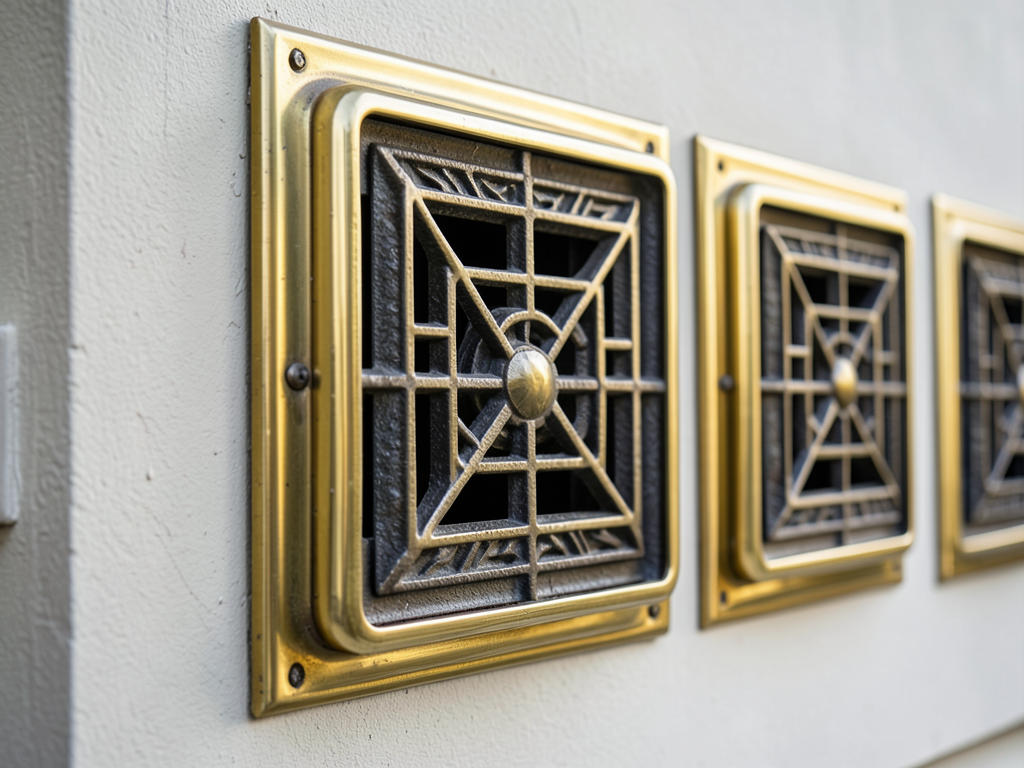
Restoring the original character of Society Hill’s historic homes means preserving every architectural detail including the HVAC grilles and vents. These small elements speak volumes about a building’s era and craftsmanship. Custom-designed registers for 18th and 19th-century Philadelphia rowhomes require balancing authentic aesthetics with modern airflow performance. The challenge lies in finding or fabricating registers that match Federal-style symmetry or Victorian-era ornamentation while meeting today’s heating and cooling demands. Philadelphia Historical Commission.
Society Hill homeowners face a unique dilemma. Modern plastic vents clash with original hardwood floors and marble mantels. Yet antique cast iron registers often restrict airflow or contain lead paint hazards. The solution requires understanding both Philadelphia’s architectural history and current HVAC engineering standards. This guide explores how to source authentic replacements, modify existing registers, and work within Philadelphia Historical Commission guidelines for mechanical system upgrades. Weak Airflow from Vents.
Understanding Society Hill’s Architectural Timeline
The neighborhood’s development spans three distinct periods. Federal-style homes built between 1780-1820 feature simple geometric patterns with raised panels. Victorian rowhomes from 1860-1900 showcase elaborate scrollwork and floral motifs. Early 20th-century Colonial Revival structures return to cleaner lines but with larger register openings. Each era used different materials: wrought iron for the earliest homes, cast iron for Victorian properties, and pressed steel for later constructions.
Philadelphia’s manufacturing heritage produced many of these original components. Local foundries like W.P. Cresson & Company created custom patterns for builders across the city. Their Federal Street facility cast everything from decorative cornices to functional heating registers. Understanding this local manufacturing context helps when matching existing patterns or finding period-appropriate replacements. Finding a Reliable AC Repair Service in Center City Philadelphia That Actually Shows Up.
Material Science: Cast Iron vs. Modern Alternatives
Cast iron dominated 19th-century register production for good reason. The material’s density provides excellent sound dampening and heat retention. However, original cast iron registers often suffer from internal rust buildup that restricts airflow by 40% or more. Modern alternatives include solid brass, bronze, and laser-cut steel.
Solid brass registers offer superior corrosion resistance and can be polished to match original finishes. Bronze provides a warm patina that develops naturally over decades. Both materials allow for thinner profiles than cast iron, improving airflow while maintaining visual authenticity. The trade-off comes in cost – brass registers typically run three to four times the price of standard steel options.
| Material | Airflow Efficiency | Cost per Linear Foot | Lifespan Expectancy |
|---|---|---|---|
| Cast Iron (Original) | 60-70% of designed flow | $50-150 (salvage) | 100+ years |
| Solid Brass | 85-90% of designed flow | $200-400 | 75-100 years |
| Bronze | 80-85% of designed flow | $180-350 | 80-100 years |
| Pressed Steel | 75-80% of designed flow | $75-150 | 30-50 years |
Restoration vs. Reproduction: Making the Right Choice
Restoring original registers preserves historical integrity but presents significant challenges. Lead paint removal requires professional abatement following EPA guidelines 40 CFR Part 745. Rust removal from cast iron demands chemical treatments that can weaken the metal structure. Many homeowners discover that restoration costs exceed reproduction prices once labor is factored in. EPA Lead Paint Guidelines.
Reproduction offers consistency and modern performance. High-quality manufacturers can replicate intricate Victorian patterns using CNC laser cutting. The process begins with detailed measurements and photographs of existing registers. Craftsmen then create CAD files that guide precision cutting of modern materials. The result maintains visual authenticity while incorporating features like adjustable louvers and removable filters.
Key decision factors include the historical significance of existing registers, the condition of original metalwork, airflow requirements for modern HVAC systems, budget constraints, and Philadelphia Historical Commission requirements.
Philadelphia Historical Commission Guidelines
The Philadelphia Historical Commission enforces strict standards for exterior modifications in Society Hill. While interior work typically requires less oversight, any changes visible from public streets must maintain historical character. The Commission references the Secretary of the Interior’s Standards for Rehabilitation when evaluating proposals. Secretary of the Interior’s Standards.
Mechanical system upgrades require special consideration. The Commission evaluates proposals based on the visibility of new components, the impact on original architectural features, the ability to reverse modifications without damage, and compatibility with the building’s historical period.
Documentation proves crucial for approval. Applicants must submit detailed drawings showing register locations, material specifications, and finish samples. The Commission particularly scrutinizes proposals that alter original floor plans or remove historic hardware.
High-Velocity HVAC Integration
Traditional ductwork often cannot fit within Society Hill’s narrow wall cavities and low floor-to-ceiling heights. High-velocity systems using Unico or SpacePak technology solve this problem through 2-inch flexible ducts. These systems require specialized registers that maximize airflow through minimal openings.
High-velocity registers differ significantly from traditional designs. They feature louvered faces that direct air in multiple directions, internal dampers for room-by-room control, removable faceplates for filter access, and low-profile designs that sit nearly flush with surfaces.
Custom fabrication becomes essential when integrating high-velocity systems into historic homes. Registers must match surrounding millwork while accommodating the system’s unique airflow patterns. Some manufacturers offer historically accurate faceplates that mount over modern high-velocity cores.
Architectural Salvage Resources in Philadelphia
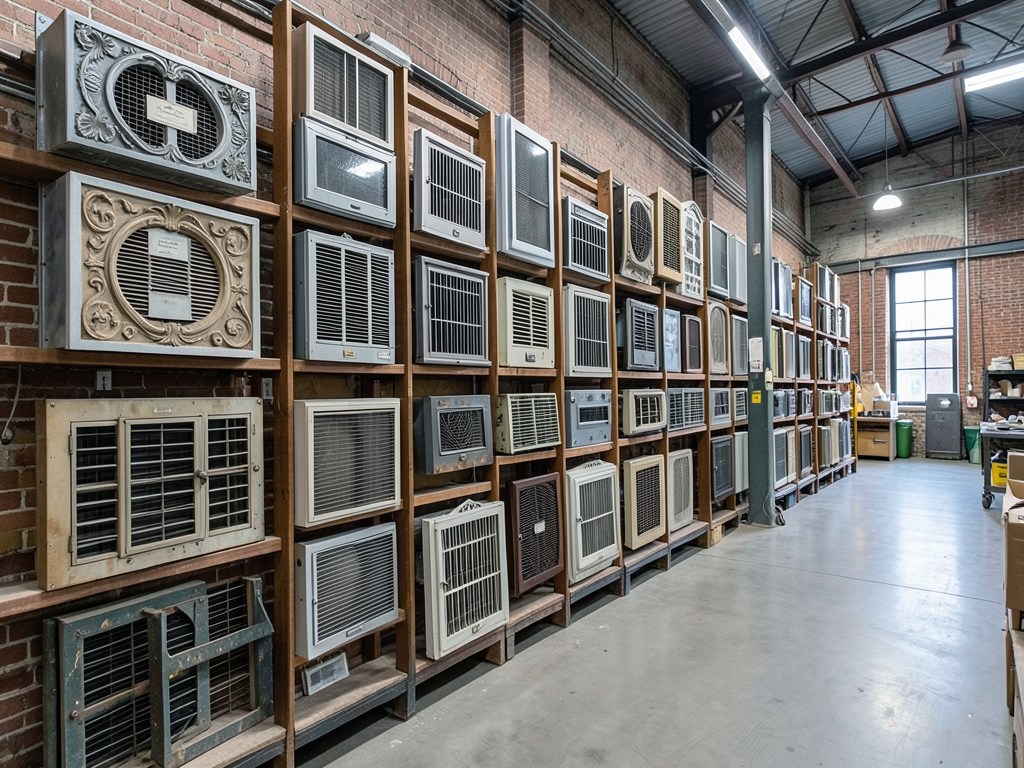
Philadelphia’s architectural salvage industry provides valuable resources for historic register restoration. Local suppliers specialize in materials from specific eras and neighborhoods. Key considerations when sourcing salvage include measuring existing openings accurately, documenting current style through photographs, researching local salvage yards, verifying material compatibility, and planning for restoration costs.
Notable Philadelphia salvage operations include Provenance Architectural Salvage in Kensington, ReSource LLC in South Philadelphia, and Philadelphia Salvage Company in Northern Liberties. Each maintains different inventories based on their acquisition networks and specialties.
Patina Preservation and Finish Options
Original registers develop unique patinas that tell the story of a building’s history. Preservation versus restoration becomes a philosophical question. Some homeowners prefer the authenticity of aged surfaces, while others desire the crispness of newly finished metal.
Patina preservation techniques include micro-abrasion cleaning to remove surface dirt without removing oxidation, clear coat application to stabilize existing finishes, selective polishing to highlight raised details, and controlled oxidation to even out color variations.
Modern finish options provide alternatives to original patinas. Powder coating offers durability and color consistency. Electropolishing creates mirror finishes on brass and bronze. Chemical patination allows exact color matching to existing hardware or interior design schemes.
Airflow Calculations for Historic Registers
Modern HVAC systems require specific airflow volumes measured in cubic feet per minute (CFM). Traditional registers often cannot provide adequate flow due to restricted openings or internal obstructions. Professional HVAC engineers calculate required CFM based on room size, insulation values, and climate conditions.
Standard residential requirements include 1 CFM per square foot for living areas, 1.5 CFM per square foot for bedrooms, 50 CFM minimum for bathrooms, and 100 CFM minimum for kitchens.
Historic registers typically provide 60-70% of their rated capacity due to accumulated debris and design limitations. This reduction necessitates larger register openings or additional units to meet modern comfort standards. Some homeowners accept slightly reduced airflow to maintain historical accuracy, while others prioritize comfort over authenticity. Best Rated HVAC Contractors in the Main Line Area.
Custom Fabrication Process
Custom register fabrication begins with detailed measurements and design specifications. The process typically follows these steps: site measurement and documentation, design development and material selection, prototype creation and client approval, production using selected fabrication method, finish application and quality control, and installation and testing.
Fabrication methods vary by complexity and budget. Simple geometric patterns work well with laser cutting. Intricate scrollwork may require CNC machining or traditional casting. Hand fabrication provides the highest authenticity but commands premium prices.
Installation Considerations
Proper installation ensures both aesthetic and functional success. Key factors include subfloor preparation and leveling, moisture barrier installation in basements, secure mounting to prevent rattling, proper sealing to prevent air leakage, and clearance for filter replacement and maintenance.
Historic homes often present unique challenges. Uneven floors require shimming or custom mounting brackets. Original framing may not support modern register weights. Some installations require temporary removal of baseboards or other trim for proper fit.
Maintenance and Cleaning Protocols
Historic registers require specific maintenance to preserve both function and appearance. Regular cleaning prevents dust buildup that restricts airflow. The frequency depends on factors like pet ownership, smoking, and local air quality.
Recommended cleaning schedule includes monthly light dusting with microfiber cloth, quarterly vacuuming with brush attachment, annual deep cleaning with appropriate cleaners, and professional inspection every five years.
Cleaning methods vary by material. Brass and bronze tolerate mild detergents. Cast iron requires rust inhibitors after cleaning. Painted surfaces need gentle cleaners to prevent finish damage.
Energy Efficiency Considerations
Historic registers impact overall HVAC efficiency. Restricted airflow forces systems to work harder, increasing energy consumption. Modern registers with optimized designs can improve system efficiency by 10-15% while maintaining historical appearance.
Efficiency improvements include adjustable louvers for directional control, removable filters for improved air quality, thermal breaks to prevent condensation, and sealed construction to prevent air leakage.
Some homeowners balance efficiency with authenticity by installing modern registers in less visible locations while preserving original registers in prominent areas. The True Cost of Installing Central Air in an Older South Philly Rowhome.
Cost Factors and Budgeting
Custom register projects involve multiple cost components. Understanding these helps with accurate budgeting: design and engineering fees, material costs that vary by metal type, fabrication labor, finish application, installation labor, and permitting and inspection fees.
Typical cost ranges include $150-500 per unit for salvaged register restoration, $300-800 per unit for reproduction standard patterns, $800-2,500 per unit for custom fabrication, and $2,500+ per unit for high-end custom work.
Factors affecting price include complexity of design, material selection, finish requirements, and installation difficulty.
Case Studies: Society Hill Success Stories
Several Society Hill homeowners have successfully navigated the challenges of historic register restoration. One Delancey Street homeowner preserved original Federal-style registers while upgrading to high-velocity HVAC. The project required custom adapters to connect modern ducts to 200-year-old openings.
A Pine Street Victorian restoration involved reproducing elaborate brass registers that had been removed decades earlier. The new registers incorporated modern filter systems while maintaining the home’s ornate character. The project won a preservation award from the Philadelphia Historical Commission.
Second Street homeowners opted for a hybrid approach, using salvaged registers in public spaces and modern reproductions in private areas. This strategy balanced historical authenticity with practical considerations like improved airflow and easier maintenance.
Future Trends in Historic HVAC Integration
Emerging technologies offer new possibilities for historic register integration. 3D printing allows rapid prototyping of custom designs. Smart registers with built-in sensors can optimize airflow automatically. Sustainable materials like recycled brass reduce environmental impact.
Smart home integration presents both opportunities and challenges. Modern systems can monitor register performance and alert homeowners to maintenance needs. However, visible sensors and controls must be carefully integrated to avoid compromising historical aesthetics.
Philadelphia’s growing emphasis on energy efficiency may influence future preservation standards. Balancing historical authenticity with carbon reduction goals will likely become increasingly important for Society Hill homeowners.
Frequently Asked Questions
Can I install modern registers in my historic Society Hill home?
Yes, but the Philadelphia Historical Commission requires that replacements maintain the visual character of the original building. Modern registers must be historically appropriate in size, material, and design. Some homeowners choose to install modern registers in less visible locations while preserving original hardware in prominent areas.
How do I know if my registers contain lead paint?
Registers installed before 1978 likely contain lead paint. Testing involves using EPA-recognized lead test kits or professional testing services. If lead is present, removal and restoration must follow EPA guidelines 40 CFR Part 745 to ensure safe handling and disposal.
What’s the best way to clean antique cast iron registers?
Start with gentle methods like microfiber dusting and vacuuming. For deeper cleaning, use mild soap and water, avoiding harsh chemicals that can damage the patina. Cast iron requires thorough drying and rust inhibitor application afterward. Professional restoration may be necessary for heavily corroded pieces.
How much do custom historic registers cost?
Costs vary widely based on complexity, materials, and fabrication method. Simple salvaged register restoration starts around $150 per unit, while custom fabrication of intricate designs can exceed $2,500 per register. Most homeowners budget $500-1,500 per register for quality reproduction work.
Do I need permits to replace HVAC registers in Society Hill?
Interior modifications typically don’t require permits, but any work visible from public streets may need approval from the Philadelphia Historical Commission. The Commission reviews proposals based on historical accuracy and visual impact. Always check with the Commission before beginning work on visible exterior elements.
Preserving Society Hill’s architectural heritage requires careful attention to every detail, including HVAC registers and vents. Whether you choose restoration, reproduction, or custom fabrication, the key is balancing historical authenticity with modern performance requirements. Working with experienced professionals who understand both Philadelphia’s preservation standards and current HVAC technology ensures successful outcomes.
The investment in quality registers pays dividends through improved comfort, energy efficiency, and property value. More importantly, it maintains the visual continuity that makes Society Hill one of Philadelphia’s most distinctive neighborhoods. Ready to upgrade your historic home’s HVAC system while preserving its character? Call (215) 610-9099 today to schedule your consultation.
Don’t wait until system failure forces rushed decisions. Pick up the phone and call (215) 610-9099 before the next season hits. Our experts understand the unique challenges of Society Hill’s historic homes and can help you find the perfect balance between preservation and performance. Expert Boiler Repair and Maintenance for Historic Homes in Chestnut Hill and Mt Airy.
{
“@context”: “https://schema.org”,
“@type”: “BlogPosting”,
“headline”: “Designing Custom HVAC Grilles and Vents for High End Historic Restorations in Society Hill”,
“description”: “Expert guide to custom HVAC grilles and vents for Society Hill historic homes. Learn about materials, restoration, Philadelphia Historical Commission guidelines, and local architectural salvage resources.”,
“wordCount”: 2240,
“datePublished”: “2026-05-01T11:03:00.000Z”,
“dateModified”: “2026-05-01T11:03:00.000Z”,
“inLanguage”: “en-US”,
“mainEntityOfPage”: {
“@type”: “WebPage”,
“@id”: “https://elitehvacphiladelphia.com”
},
“publisher”: {
“@type”: “LocalBusiness”,
“name”: “Elite HVAC Philadelphia”,
“url”: “https://elitehvacphiladelphia.com”
},
“author”: {
“@type”: “Organization”,
“name”: “Elite HVAC Philadelphia”,
“url”: “https://elitehvacphiladelphia.com”
},
“image”: {
“@type”: “ImageObject”,
“url”: “https://elitehvacphiladelphia.com/wp-content/uploads/2026/03/designing-custom-hvac-grilles-and-vents-for-high-e-1.png”
}
}
{
“@context”: “https://schema.org”,
“@type”: “HVACBusiness”,
“name”: “Elite HVAC Philadelphia”,
“url”: “https://elitehvacphiladelphia.com”,
“address”: {
“@type”: “PostalAddress”,
“addressLocality”: “Philadelphia”
},
“areaServed”: {
“@type”: “City”,
“name”: “Philadelphia”
}
}
{
“@context”: “https://schema.org”,
“@type”: “FAQPage”,
“mainEntity”: [
{
“@type”: “Question”,
“name”: “Can I install modern registers in my historic Society Hill home?”,
“acceptedAnswer”: {
“@type”: “Answer”,
“text”: “Yes, but the Philadelphia Historical Commission requires that replacements maintain the visual character of the original building. Modern registers must be historically appropriate in size, material, and design. Some homeowners choose to install modern registers in less visible locations while preserving original hardware in prominent areas.”
}
},
{
“@type”: “Question”,
“name”: “How do I know if my registers contain lead paint?”,
“acceptedAnswer”: {
“@type”: “Answer”,
“text”: “Registers installed before 1978 likely contain lead paint. Testing involves using EPA-recognized lead test kits or professional testing services. If lead is present, removal and restoration must follow EPA guidelines 40 CFR Part 745 to ensure safe handling and disposal.”
}
},
{
“@type”: “Question”,
“name”: “What’s the best way to clean antique cast iron registers?”,
“acceptedAnswer”: {
“@type”: “Answer”,
“text”: “Start with gentle methods like microfiber dusting and vacuuming. For deeper cleaning, use mild soap and water, avoiding harsh chemicals that can damage the patina. Cast iron requires thorough drying and rust inhibitor application afterward. Professional restoration may be necessary for heavily corroded pieces.”
}
},
{
“@type”: “Question”,
“name”: “How much do custom historic registers cost?”,
“acceptedAnswer”: {
“@type”: “Answer”,
“text”: “Costs vary widely based on complexity, materials, and fabrication method. Simple salvaged register restoration starts around $150 per unit, while custom fabrication of intricate designs can exceed $2,500 per register. Most homeowners budget $500-1,500 per register for quality reproduction work.”
}
},
{
“@type”: “Question”,
“name”: “Do I need permits to replace HVAC registers in Society Hill?”,
“acceptedAnswer”: {
“@type”: “Answer”,
“text”: “Interior modifications typically don’t require permits, but any work visible from public streets may need approval from the Philadelphia Historical Commission. The Commission reviews proposals based on historical accuracy and visual impact. Always check with the Commission before beginning work on visible exterior elements.”
}
}
]
}
{
“@context”: “https://schema.org”,
“@type”: “BreadcrumbList”,
“itemListElement”: [
{
“@type”: “ListItem”,
“position”: 1,
“name”: “Home”,
“item”: “https://elitehvacphiladelphia.com”
},
{
“@type”: “ListItem”,
“position”: 2,
“name”: “Blog”,
“item”: “https://elitehvacphiladelphia.com/blog”
},
{
“@type”: “ListItem”,
“position”: 3,
“name”: “Designing Custom HVAC Grilles and Vents for High End Historic Restorations in Society Hill”
}
]
}
{
“@context”: “https://schema.org”,
“@type”: “Service”,
“serviceType”: “HVAC”,
“provider”: {
“@type”: “LocalBusiness”,
“name”: “Elite HVAC Philadelphia”,
“url”: “https://elitehvacphiladelphia.com”
},
“areaServed”: {
“@type”: “City”,
“name”: “Philadelphia”
},
“description”: “Expert guide to custom HVAC grilles and vents for Society Hill historic homes. Learn about materials, restoration, Philadelphia Historical Commission guidelines, and local architectural salvage resources.”
}