
Custom Radiant Floor Heating for Historic Society Hill Renovations
Radiant floor heating transforms Society Hill’s historic rowhomes with invisible warmth that rises from beneath your feet. This luxury heating solution eliminates cold drafts and frees up wall space by removing radiators. In Philadelphia’s humid continental climate with freezing winters, radiant systems provide consistent comfort while preserving the architectural integrity of 18th and 19th-century brick homes. The technology works by circulating warm water through PEX tubing installed under your flooring, creating a thermal mass that maintains steady temperatures even during Pennsylvania’s coldest nights. Philadelphia Water Department.
Why Radiant Heating Works Perfectly in Society Hill’s Historic Homes
Society Hill’s Federal-style rowhomes present unique heating challenges with their thick masonry walls, narrow floor plans, and original hardwood flooring. Traditional forced-air systems struggle in these spaces due to limited ductwork options and uneven heat distribution. Radiant floor heating solves these problems by delivering warmth from below, eliminating the need to modify historic plaster walls or sacrifice ceiling height for bulky ductwork.
The thermal mass of Society Hill’s brick construction actually enhances radiant heating performance. These solid walls absorb heat slowly and release it gradually, creating a natural buffer against Philadelphia’s temperature swings. This means your system runs less frequently while maintaining consistent comfort, reducing energy consumption by up to 30% compared to conventional heating methods. HVAC Philadelphia.
Philadelphia’s building code requires compliance with the Pennsylvania Uniform Construction Code for any HVAC modifications in historic districts. The Society Hill Civic Association also mandates that any visible equipment maintain the neighborhood’s historic character. Radiant systems meet both requirements since all components hide beneath finished flooring, preserving the authentic appearance of these landmark properties.
Hydronic vs Electric: Choosing the Right System for Your Society Hill Home
Hydronic radiant heating dominates Society Hill renovations because it integrates seamlessly with existing boiler systems common in older Philadelphia homes. These water-based systems use a boiler to heat water that circulates through PEX tubing installed in thermal mass materials like concrete or specialized underlayment panels. The initial installation costs more than electric systems but provides superior efficiency for whole-home heating. Expert Boiler Repair and Maintenance for Historic Homes in Chestnut Hill and Mt Airy.
Electric radiant mats work best for smaller areas like bathrooms or kitchen additions where extending existing hydronic systems proves impractical. These thin heating elements install directly under tile or engineered flooring and connect to standard electrical circuits. While installation costs less upfront, electric systems typically cost more to operate in Philadelphia’s cold climate.
System selection depends on your home’s existing infrastructure. Properties with functioning boilers benefit from hydronic conversion since the infrastructure already exists. Homes undergoing complete renovations or additions might consider electric for targeted comfort in specific rooms. The Philadelphia Gas Works currently offers rebates for high-efficiency boiler installations, making hydronic systems more attractive for comprehensive heating upgrades.
Table: Comparison of Radiant Heating Systems for Society Hill Homes
| System Type | Best For | Installation Cost | Operating Cost | Retrofitting Difficulty |
|---|---|---|---|---|
| Hydronic | Whole-home heating | $$$-$$$$ | $-$$ | Moderate-High |
| Electric Mats | Bathrooms, kitchens | $$ | $$-$$$ | Low-Moderate |
| Hybrid Systems | Partial renovations | $$-$$$ | $-$$ | Moderate |
Our Custom Installation Process for Society Hill Properties
Every radiant heating project in Society Hill begins with a comprehensive heat loss calculation specific to your home’s construction. We measure wall thickness, window types, ceiling heights, and insulation levels to determine the exact heating capacity needed. This diagnostic step prevents oversizing or undersizing, which directly impacts system efficiency and operating costs. Weak Airflow from Vents.
The installation process varies significantly based on your home’s construction date. Pre-1900 rowhomes often require subfloor reinforcement before tubing installation since original joists weren’t designed for modern heating loads. We use specialized moisture meters to test existing subfloors for water content, ensuring the wood won’t warp after tubing installation.
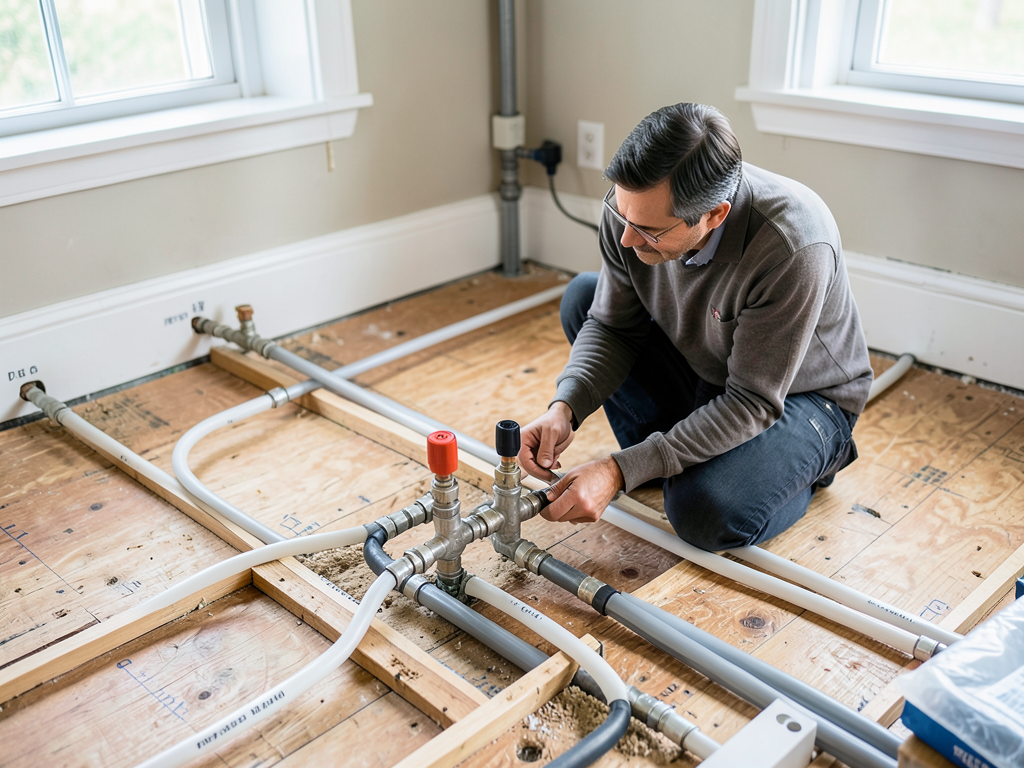
Manifold placement requires careful planning in Society Hill’s narrow floor plans. We typically locate manifolds in utility closets or basement spaces where they remain accessible for maintenance but hidden from view. Each loop of PEX tubing connects to the manifold, allowing individual room temperature control through separate thermostats.
Floor covering selection impacts system performance significantly. Tile and stone conduct heat most efficiently, while engineered hardwood works well with proper underlayment. We test all flooring materials for compatibility with radiant heat before installation, measuring dimensional stability at operating temperatures to prevent future warping or gaps.
Energy Efficiency and Philadelphia Utility Considerations
Radiant floor heating operates at lower temperatures than traditional radiators or forced-air systems, typically between 85-125°F compared to 150-180°F for baseboard heating. This lower operating temperature translates to energy savings of 15-30% annually. Philadelphia’s average winter temperatures of 26-41°F make these savings particularly valuable during the six-month heating season.
PGW natural gas rates in Philadelphia average $1.15 per therm for residential customers in 2026. A properly designed hydronic radiant system uses approximately 0.8 therms per square foot annually for whole-home heating. This translates to heating costs of $0.92 per square foot per year, significantly less than electric resistance heating at $2.50-3.00 per square foot.
The Pennsylvania Alternative Energy Portfolio Standard requires utilities to source 18% of electricity from renewable sources by 2026. This mandate gradually reduces the carbon footprint of electric radiant systems as the grid becomes cleaner. However, natural gas boilers still provide the most cost-effective heating solution for Society Hill’s climate given current utility rates.
PECO offers rebates up to $500 for high-efficiency boiler installations that meet ENERGY STAR specifications. These rebates apply to many hydronic radiant systems when paired with modulating-condensing boilers that achieve 90%+ efficiency. Our team handles all rebate paperwork as part of your installation service.
Preserving Historic Character While Adding Modern Comfort
Society Hill’s historic designation requires careful consideration of any modifications to contributing structures. The Philadelphia Historical Commission reviews all exterior changes, but radiant heating’s invisible nature typically avoids regulatory hurdles. However, we still coordinate with the commission for any penetrations through exterior walls or modifications to original floor structures.
Many Society Hill homes feature original wide-plank pine flooring that presents unique installation challenges. We use specialized low-profile systems that install at just 1/2″ above the existing subfloor, preserving the original floor height and avoiding transitions between rooms. These systems work particularly well under historic flooring since they don’t require removing irreplaceable materials.
Moisture management becomes critical in Philadelphia’s humid climate. We install vapor barriers and use PEX tubing with oxygen diffusion barriers to prevent moisture migration that could damage historic wood elements. The system’s low operating temperatures also reduce expansion and contraction cycles that stress old flooring joints.
Working with Society Hill’s narrow rowhome footprints requires creative space planning. We often integrate the mechanical room into existing closets or basement corners, using custom cabinetry to conceal equipment while maintaining accessibility for maintenance. This approach preserves the home’s historic character while providing modern heating convenience.
Maintenance Requirements for Philadelphia’s Climate
Philadelphia’s hard water, with mineral content averaging 150-200 ppm, affects radiant heating system longevity. We install water softeners or use propylene glycol mixtures in closed-loop systems to prevent scale buildup in tubing and heat exchangers. Annual water quality testing helps identify potential issues before they impact system performance.
System maintenance follows a seasonal schedule aligned with Philadelphia’s heating demands. We recommend pressure testing in early fall before the heating season begins, checking for leaks that might develop during summer months when systems remain idle. The expansion tanks require inspection every two years to ensure proper pressure regulation.
Thermostat programming optimizes energy savings in Society Hill’s historic homes. We install smart thermostats that learn your schedule and adjust temperatures automatically, reducing energy consumption by 10-15% without sacrificing comfort. These devices also provide diagnostic alerts if system performance drops below optimal levels.
Floor surface temperature monitoring prevents damage to historic flooring materials. We install sensors that maintain surface temperatures below 85°F for wood floors and 90°F for tile, preventing warping or adhesive failure. These safety controls also comply with Philadelphia’s building codes for radiant heating installations.
Cost Factors and Return on Investment
Radiant floor heating installation costs in Society Hill range from $12-25 per square foot depending on system type and installation complexity. Hydronic systems for whole-home heating typically cost $18-25 per square foot, while electric systems for smaller areas run $12-18 per square foot. These costs include all materials, labor, and necessary permits.
Several factors influence final pricing in Society Hill’s historic homes. Homes requiring subfloor reinforcement add $3-5 per square foot to installation costs. Properties with difficult access for equipment or materials might incur additional labor charges of 10-15%. The age and condition of existing mechanical systems also affects overall project scope and budget.
Energy savings provide the primary return on investment for radiant heating systems. Society Hill homeowners typically recover installation costs within 5-7 years through reduced utility bills. Additional value comes from increased property appeal and the elimination of bulky radiators that limit furniture placement and interior design options.
Federal tax credits under the Inflation Reduction Act provide 30% credits for qualifying high-efficiency heating equipment installed through 2032. Many Society Hill radiant systems qualify when paired with ENERGY STAR certified boilers or heat pumps. These credits can reduce net installation costs by thousands of dollars.
Service Areas Throughout Philadelphia’s Historic Districts
We serve Society Hill and surrounding historic neighborhoods including Old City, Queen Village, and Washington Square West. Our team understands the unique requirements of Philadelphia’s historic districts, from the Society Hill Civic Association guidelines to the Old City District design review process. We’ve completed successful installations in zip codes 19106, 19147, and 19102.
Beyond Society Hill, we bring the same expertise to other Philadelphia historic areas. Rittenhouse Square homes benefit from our experience with high-rise radiant installations, while our work in Fairmount addresses the specific challenges of Victorian-era construction. Each neighborhood presents distinct requirements, but our approach remains consistent: preserve historic character while delivering modern comfort.
Philadelphia County’s building codes require specific permits for radiant heating installations, including mechanical, building, and electrical permits when applicable. We handle all permitting through the Department of Licenses and Inspections, ensuring your project complies with local regulations while minimizing delays.
Our team maintains certifications from the Radiant Professionals Alliance and holds Pennsylvania Home Improvement Contractor licenses. This combination of technical expertise and local knowledge ensures your Society Hill radiant heating project meets both performance expectations and historic preservation requirements.
Frequently Asked Questions
How long does radiant floor heating installation take in a Society Hill rowhome?
Most Society Hill installations require 3-5 days for a single room and 2-3 weeks for whole-home systems. The timeline includes demolition of existing flooring, subfloor preparation, tubing installation, manifold setup, and final flooring replacement. Historic homes might require additional time for structural reinforcement or unexpected conditions discovered during demolition.
Can radiant heating work with my existing radiator system?
Yes, many Society Hill homes successfully combine radiant floor heating with existing radiators. We typically install radiant systems in new additions or renovated areas while maintaining original radiators in unchanged spaces. This hybrid approach provides targeted comfort where needed while preserving the home’s historic heating infrastructure.
What flooring types work best over radiant heating?
Tile, stone, and engineered hardwood perform best over radiant heating due to their thermal conductivity and dimensional stability. Natural stone conducts heat most efficiently, while engineered products offer better moisture resistance than solid hardwood. We test all flooring materials for compatibility before installation to prevent future issues.
How much does radiant heating increase my home’s value?
Radiant floor heating typically increases home value by 5-10% in Society Hill’s luxury market. Buyers value the comfort, efficiency, and space-saving benefits, particularly in historic homes where traditional HVAC upgrades prove challenging. The system’s invisible nature also preserves the home’s historic character, appealing to preservation-minded buyers.
Is radiant heating noisy like traditional HVAC systems?
Radiant floor heating operates virtually silently since it contains no fans, blowers, or moving parts in living spaces. The only sound comes from the boiler or circulation pump, typically located in a mechanical room away from living areas. This quiet operation particularly benefits Society Hill’s historic homes where noise reduction enhances the peaceful residential character.
Ready to Transform Your Society Hill Home with Radiant Heat?
Radiant floor heating represents the perfect marriage of historic preservation and modern comfort for Society Hill’s distinguished rowhomes. Our team brings decades of experience navigating Philadelphia’s unique building challenges, from historic district regulations to the specific requirements of masonry construction. We understand that your Society Hill home deserves heating solutions that enhance rather than compromise its architectural integrity.
Don’t let another Philadelphia winter pass with cold floors and drafty rooms. Our custom radiant heating systems provide the invisible comfort solution that historic homeowners have been seeking. We handle everything from initial heat loss calculations through final system commissioning, ensuring your project meets both your comfort needs and Society Hill’s strict preservation standards.
Call (215) 610-9099 today to schedule your free consultation. Our radiant heating specialists will evaluate your home’s specific requirements and provide a detailed proposal tailored to your Society Hill property. Experience the warmth and efficiency of modern radiant heating while preserving the timeless character of your historic Philadelphia home.
Pick up the phone and call (215) 610-9099 before the next cold snap hits. Society Hill’s narrow streets and historic brick construction make timely installation critical during the busy fall season. Don’t wait until freezing temperatures arrive to discover your heating system can’t keep up with Philadelphia’s demanding winters. For more information, visit U.S. Department of Energy on Radiant Heating.
{
“@context”: “https://schema.org”,
“@type”: “BlogPosting”,
“headline”: “Custom Radiant Floor Heating for Historic Society Hill Renovations”,
“description”: “Discover expert radiant floor heating installation for Society Hill’s historic homes. Learn about hydronic systems, energy efficiency, and custom solutions for Philadelphia’s unique rowhomes.”,
“wordCount”: 2239,
“datePublished”: “2026-03-21T12:08:00.000Z”,
“dateModified”: “2026-03-21T12:08:00.000Z”,
“inLanguage”: “en-US”,
“mainEntityOfPage”: {
“@type”: “WebPage”,
“@id”: “https://elitehvacphiladelphia.com”
},
“publisher”: {
“@type”: “LocalBusiness”,
“name”: “Elite HVAC Philadelphia”,
“url”: “https://elitehvacphiladelphia.com”
},
“author”: {
“@type”: “Organization”,
“name”: “Elite HVAC Philadelphia”,
“url”: “https://elitehvacphiladelphia.com”
},
“image”: {
“@type”: “ImageObject”,
“url”: “https://elitehvacphiladelphia.com/wp-content/uploads/2026/03/custom-radiant-floor-heating-for-historic-society-1.png”
}
}
{
“@context”: “https://schema.org”,
“@type”: “HVACBusiness”,
“name”: “Elite HVAC Philadelphia”,
“url”: “https://elitehvacphiladelphia.com”,
“address”: {
“@type”: “PostalAddress”,
“addressLocality”: “Philadelphia”
},
“areaServed”: {
“@type”: “City”,
“name”: “Philadelphia”
}
}
{
“@context”: “https://schema.org”,
“@type”: “FAQPage”,
“mainEntity”: [
{
“@type”: “Question”,
“name”: “How long does radiant floor heating installation take in a Society Hill rowhome?”,
“acceptedAnswer”: {
“@type”: “Answer”,
“text”: “Most Society Hill installations require 3-5 days for a single room and 2-3 weeks for whole-home systems. The timeline includes demolition of existing flooring, subfloor preparation, tubing installation, manifold setup, and final flooring replacement. Historic homes might require additional time for structural reinforcement or unexpected conditions discovered during demolition.”
}
},
{
“@type”: “Question”,
“name”: “Can radiant heating work with my existing radiator system?”,
“acceptedAnswer”: {
“@type”: “Answer”,
“text”: “Yes, many Society Hill homes successfully combine radiant floor heating with existing radiators. We typically install radiant systems in new additions or renovated areas while maintaining original radiators in unchanged spaces. This hybrid approach provides targeted comfort where needed while preserving the home’s historic heating infrastructure.”
}
},
{
“@type”: “Question”,
“name”: “What flooring types work best over radiant heating?”,
“acceptedAnswer”: {
“@type”: “Answer”,
“text”: “Tile, stone, and engineered hardwood perform best over radiant heating due to their thermal conductivity and dimensional stability. Natural stone conducts heat most efficiently, while engineered products offer better moisture resistance than solid hardwood. We test all flooring materials for compatibility before installation to prevent future issues.”
}
},
{
“@type”: “Question”,
“name”: “How much does radiant heating increase my home’s value?”,
“acceptedAnswer”: {
“@type”: “Answer”,
“text”: “Radiant floor heating typically increases home value by 5-10% in Society Hill’s luxury market. Buyers value the comfort, efficiency, and space-saving benefits, particularly in historic homes where traditional HVAC upgrades prove challenging. The system’s invisible nature also preserves the home’s historic character, appealing to preservation-minded buyers.”
}
},
{
“@type”: “Question”,
“name”: “Is radiant heating noisy like traditional HVAC systems?”,
“acceptedAnswer”: {
“@type”: “Answer”,
“text”: “Radiant floor heating operates virtually silently since it contains no fans, blowers, or moving parts in living spaces. The only sound comes from the boiler or circulation pump, typically located in a mechanical room away from living areas. This quiet operation particularly benefits Society Hill’s historic homes where noise reduction enhances the peaceful residential character.”
}
},
{
“@type”: “Question”,
“name”: “Ready to Transform Your Society Hill Home with Radiant Heat?”,
“acceptedAnswer”: {
“@type”: “Answer”,
“text”: “Radiant floor heating represents the perfect marriage of historic preservation and modern comfort for Society Hill’s distinguished rowhomes. Our team brings decades of experience navigating Philadelphia’s unique building challenges, from historic district regulations to the specific requirements of masonry construction. We understand that your Society Hill home deserves heating solutions that enhance rather than compromise its architectural integrity.”
}
}
]
}
{
“@context”: “https://schema.org”,
“@type”: “BreadcrumbList”,
“itemListElement”: [
{
“@type”: “ListItem”,
“position”: 1,
“name”: “Home”,
“item”: “https://elitehvacphiladelphia.com”
},
{
“@type”: “ListItem”,
“position”: 2,
“name”: “Blog”,
“item”: “https://elitehvacphiladelphia.com/blog”
},
{
“@type”: “ListItem”,
“position”: 3,
“name”: “Custom Radiant Floor Heating for Historic Society Hill Renovations”
}
]
}
{
“@context”: “https://schema.org”,
“@type”: “Service”,
“serviceType”: “HVAC”,
“provider”: {
“@type”: “LocalBusiness”,
“name”: “Elite HVAC Philadelphia”,
“url”: “https://elitehvacphiladelphia.com”
},
“areaServed”: {
“@type”: “City”,
“name”: “Philadelphia”
},
“description”: “Discover expert radiant floor heating installation for Society Hill’s historic homes. Learn about hydronic systems, energy efficiency, and custom solutions for Philadelphia’s unique rowhomes.”
}