
How Much Space You Need to Clear Around Your Mt Airy Outdoor AC Unit
Philadelphia summers can push your AC system to its limits, especially in older Mt Airy homes where outdoor units often sit in tight yards surrounded by mature trees and dense landscaping. Proper clearance around your condenser unit isn’t just about aesthetics—it’s about preventing system failure when you need cooling the most. Air Conditioning Contractors of America.
Most Mt Airy homeowners don’t realize that restricted airflow around their outdoor AC unit can reduce efficiency by up to 30% and shorten equipment life by several years. The combination of Philadelphia’s humid summers and Mt Airy’s established tree canopy creates unique challenges that require specific clearance measurements to maintain optimal performance. Philadelphia Department of Licenses and Inspections.
Standard AC Unit Clearance Guidelines
National HVAC standards from the Air Conditioning Contractors of America (ACCA) establish baseline clearance requirements that apply to most residential installations. These measurements ensure proper airflow, service access, and heat dissipation. Best Rated HVAC Contractors in the Main Line Area.
Horizontal clearance from walls and obstructions should be at least 12 inches on all sides. This allows adequate air intake through the unit’s sides and prevents recirculation of hot exhaust air. For service access, maintain 24 inches of clearance on at least one side to allow technicians to remove panels and access electrical components safely. Weak Airflow from Vents.
Vertical clearance is critical for heat dissipation. The top of your condenser needs 60 inches of unobstructed space above the unit. This prevents hot air from being trapped and recirculating back through the system, which forces the compressor to work harder and consume more electricity.
Philadelphia row homes often have less than ideal spacing between buildings, making these clearances even more important. In Mt Airy’s historic districts, many homes were built with only 18-24 inches between structures, requiring careful planning to meet minimum requirements.
Why Clearance Matters for Your HVAC System
Restricted airflow around your outdoor unit forces the system to work harder, consuming more electricity and generating excess heat. This creates a cascade of problems that can lead to complete system failure during peak summer demand.. Read more about Moving Your Outdoor AC Unit to the Roof of a Francisville Rowhome (And What to Tell the Structural Engineer).
When airflow is restricted, the refrigerant cannot properly reject heat. This causes the compressor to run at higher temperatures, which accelerates wear on internal components. Over time, this can lead to compressor burnout—a repair that often costs more than replacing the entire outdoor unit. Emergency AC Repair in Fishtown (Fast Service When the Heat Hits).
Improper clearance also affects the system’s ability to remove humidity from your home. Philadelphia’s high summer humidity means your AC must run longer cycles to achieve comfortable indoor conditions. When the outdoor unit can’t dissipate heat efficiently, these cycles become even longer, increasing energy consumption and wear.
Service accessibility is another critical factor. Technicians need adequate space to diagnose problems, replace components, and perform routine maintenance. Working in cramped conditions increases repair time and the risk of damaging surrounding property or the unit itself.
Philadelphia-Specific Code Requirements
The Philadelphia Department of Licenses and Inspections (L&I) enforces the Pennsylvania Uniform Construction Code (UCC), which incorporates the International Mechanical Code (IMC) Section 308.3 for equipment clearances. For outdoor condensing units, Philadelphia code requires minimum 12-inch horizontal clearances and adequate service access for maintenance.
Philadelphia’s building code also addresses snow clearance requirements unique to our region. Units must be elevated at least 12 inches above grade to prevent snow accumulation from blocking airflow. In Mt Airy’s historic districts, this elevation requirement must be achieved without compromising the home’s architectural integrity.
Local zoning regulations in Mt Airy may affect where you can place outdoor equipment. Properties within historic districts must maintain visual compatibility with surrounding structures, which can limit placement options and require creative solutions to meet clearance requirements.
PECO, Philadelphia’s primary utility provider, recommends specific clearances around outdoor units to ensure safe operation and prevent damage to electrical components. These guidelines complement building code requirements and focus on preventing accidental contact with high-voltage connections.
Obstruction Types and Solutions
Landscaping is the most common cause of clearance violations in Mt Airy homes. Mature trees, shrubs, and perennial gardens can quickly encroach on the space around outdoor units. Fast-growing plants like bamboo or English ivy can reduce clearance by several inches per month during the growing season.
Mulch and decorative rock beds should be kept at least 12 inches away from the unit’s base. These materials can restrict airflow at ground level and trap moisture against the unit’s cabinet, accelerating corrosion. Consider using gravel or pavers in a 24-inch radius around the unit for improved drainage and maintenance access.
Fences and privacy screens require careful planning. While they can hide unsightly equipment, they must maintain the required clearance distances. Louvered or open-panel designs allow better airflow than solid panels. If you install a fence, ensure it’s at least 24 inches from the unit on all sides.
Decks and raised patios can create clearance challenges by reducing vertical space. The underside of deck boards should be at least 60 inches above the top of the condenser. If this isn’t possible, consider relocating the unit or modifying the deck design to maintain adequate clearance.
Manufacturer-Specific Variations
Different AC manufacturers may have specific clearance requirements that exceed general guidelines. Carrier, for example, recommends 24-inch side clearances for some high-efficiency models to optimize airflow performance. Lennox units often require 36-inch top clearances due to their unique coil designs.
Heat pump systems have different clearance needs than traditional AC units. Since heat pumps operate year-round, they require more consistent airflow patterns. Some manufacturers recommend 18-inch minimum clearances on all sides for heat pump installations.
Variable-speed compressors in modern high-efficiency units are particularly sensitive to airflow restrictions. These systems adjust their operation based on cooling demand, and restricted airflow can cause them to run inefficiently or shut down entirely to prevent damage.
Always check the installation manual for your specific equipment model. The manufacturer’s requirements supersede general guidelines and may include specific measurements for intake and exhaust sides of the unit.
Measuring Your Current Clearance
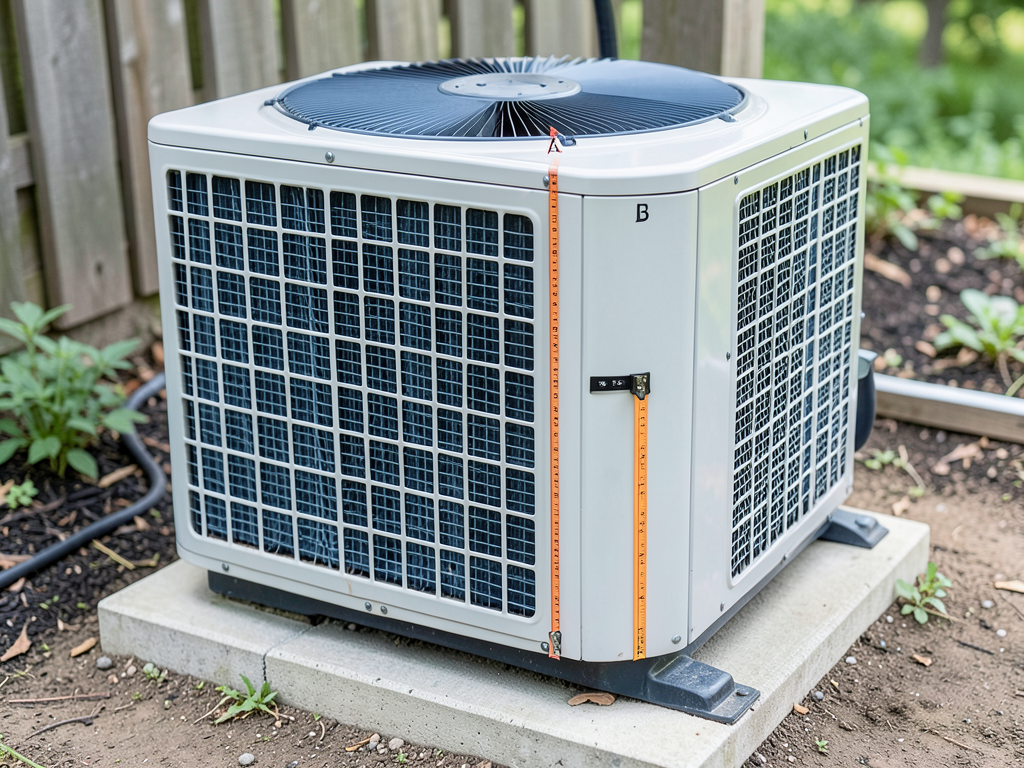
Before making any changes to your landscaping or outdoor space, measure your existing clearances. Use a tape measure to check the distance from the unit to walls, fences, and other obstructions on all sides. Measure from the unit’s cabinet, not from any attached piping or wiring.
Check vertical clearance by measuring from the top of the unit to any overhead structures. Don’t forget to account for tree branches that may hang over the unit seasonally. A branch that’s 70 inches above the unit in winter might be only 40 inches above it in summer when fully leafed out.
Examine the ground clearance around the unit’s base. The unit should be level and elevated at least 12 inches above the surrounding grade. If soil has settled around the unit over time, you may need to add gravel or create a small raised pad to maintain proper elevation.
Look for signs of restricted airflow, such as grass clippings or leaves accumulating against the unit’s sides, or plants growing within the recommended clearance zones. These indicate that your current landscaping may be too close to the equipment.
Common Clearance Violations in Mt Airy Homes
Mt Airy’s mature tree canopy creates unique clearance challenges. Large oak and maple trees common in the neighborhood can drop leaves, seeds, and branches that accumulate around outdoor units. During autumn, this debris can completely block airflow if not regularly cleared.
Many Mt Airy homes have narrow side yards where outdoor units are installed. These tight spaces often don’t provide the recommended 24-inch service access clearance. When this occurs, technicians may need to work from the front or rear of the unit, increasing repair time and complexity.
Historic home renovations sometimes relocate outdoor units to less-than-ideal locations to preserve architectural features. While this maintains the home’s historic character, it can create clearance violations that affect system performance and longevity.
Shared property lines between row homes can complicate clearance requirements. When units are installed close to property lines, maintaining proper clearances while respecting neighbor’s property rights requires careful planning and sometimes creative solutions.
Impact on Energy Efficiency and Utility Bills
Restricted airflow around your outdoor unit directly impacts energy consumption. When the system can’t dissipate heat efficiently, it runs longer cycles to achieve the same cooling effect. This increased runtime translates directly to higher electricity bills, especially during Philadelphia’s humid summer months.
A unit operating with restricted clearance may consume 15-25% more electricity than one with proper clearances. For a typical Philadelphia home, this could mean an additional $30-50 per month in cooling costs during peak summer season.
The efficiency loss compounds over time. As components wear from the additional stress of restricted airflow, the system becomes even less efficient, creating a cycle of increasing energy consumption and decreasing performance.
Proper clearance also affects your home’s overall energy efficiency. When your AC system can’t remove humidity effectively due to restricted airflow, you may find yourself lowering the thermostat to achieve comfort. This further increases energy consumption and puts additional strain on the system.
Maintenance Requirements for Optimal Performance
Regular maintenance becomes even more critical when clearance is restricted. Schedule professional cleaning at least twice per year—once before cooling season and once after. This ensures debris hasn’t accumulated in the restricted spaces around your unit.
Check your clearances monthly during the growing season. Plants can grow several inches in a single month, quickly reducing the space around your unit. Trim back vegetation as needed to maintain the recommended distances.
Clean the area around your unit regularly. Remove leaves, grass clippings, and other debris that can accumulate and restrict airflow. Pay special attention to the area beneath the unit where debris often collects unnoticed.
Inspect your unit’s base for signs of settling or erosion. The unit should remain level to ensure proper drainage and prevent water from pooling around the base. If you notice settling, address it promptly to prevent further issues.
Emergency Situations and Clearance
During heat waves, restricted clearance can cause your system to shut down completely. When outdoor temperatures exceed 95°F, units with inadequate clearance may overheat and trigger safety switches that prevent operation until the unit cools down.
Philadelphia’s summer thunderstorms can also create clearance emergencies. High winds can blow debris against your unit, temporarily blocking airflow. After severe weather, check your unit for any obstructions that may have accumulated during the storm.
Service calls during extreme weather are more difficult when clearance is restricted. Technicians may need to work in uncomfortable conditions or may be unable to access certain components without first clearing the area around the unit.
Emergency repairs are often more expensive when clearance violations complicate the work. What might be a simple fix could become a multi-hour job if technicians need to work around restricted access or remove obstructions to reach problem components.
DIY Clearance Improvements
Improving clearance around your outdoor unit doesn’t always require professional help. Start by removing any plants growing within 12 inches of the unit. This includes both above-ground vegetation and roots that may be encroaching on the unit’s base.
Install a gravel border around your unit to prevent grass and weeds from growing too close. A 24-inch wide gravel strip creates a maintenance-free zone that keeps vegetation at bay while improving drainage around the unit.
Consider installing a decorative screen or lattice that maintains proper clearance while improving the unit’s appearance. These structures should be at least 24 inches from the unit on all sides and allow for adequate airflow. The True Cost of Installing Central Air in an Older South Philly Rowhome.
If your unit is too close to a wall or fence, you may be able to create additional space by carefully relocating the unit. This typically requires professional help to disconnect and reconnect refrigerant lines, but it can significantly improve system performance.
When to Call a Professional
Call a professional if you’re unsure about your current clearances or if you notice any of these warning signs: reduced cooling performance, unusual noises from the outdoor unit, ice formation on refrigerant lines, or the unit cycling on and off frequently.
Professional assessment is also recommended if you’re planning major landscaping changes or home renovations that might affect your outdoor unit’s location or clearance. A qualified technician can help you plan changes that maintain or improve system performance.
If your unit is located in a particularly tight space, professional help may be necessary to improve clearance without compromising other aspects of your home’s design or functionality.
Regular professional maintenance includes checking and optimizing clearances as part of the service. This ensures your system continues to operate efficiently throughout its lifespan.
Frequently Asked Questions
How much space do I really need around my outdoor AC unit?
You need at least 12 inches of clearance on all sides from walls and obstructions, 24 inches for service access, and 60 inches of vertical clearance above the unit. These measurements ensure proper airflow and allow technicians to service the equipment safely.
Can I plant flowers or shrubs near my AC unit?
Yes, but keep all plants at least 12 inches away from the unit’s cabinet. Choose low-growing varieties that won’t drop excessive leaves or seeds. Avoid plants that attract bees or other insects that might nest in the unit.
What happens if I don’t maintain proper clearance?
Restricted clearance reduces efficiency by up to 30%, increases energy consumption, shortens equipment life, and can lead to complete system failure. It also makes routine maintenance more difficult and expensive.
Do I need a permit to relocate my outdoor AC unit in Philadelphia?
Relocating an outdoor unit typically requires a permit from the Philadelphia Department of Licenses and Inspections. The permit ensures the new location meets all code requirements and that refrigerant lines are properly installed.
How often should I check the clearance around my AC unit?
Check clearances monthly during the growing season and after severe weather. Plants can grow quickly, and storms can blow debris against your unit, reducing the space around it.
Conclusion
Proper clearance around your Mt Airy outdoor AC unit is essential for system efficiency, longevity, and reliable performance during Philadelphia’s hot, humid summers. The combination of mature trees, narrow lot sizes, and historic home characteristics in Mt Airy creates unique challenges that require careful attention to clearance requirements. Finding a Reliable AC Repair Service in Center City Philadelphia That Actually Shows Up.
By maintaining the recommended 12-inch horizontal clearances, 24-inch service access, and 60-inch vertical clearance, you can ensure your system operates at peak efficiency and avoid costly emergency repairs. Regular maintenance and seasonal checks will help you identify and address clearance issues before they impact your comfort.
Don’t wait until your system fails on the hottest day of the year. Take a few minutes this weekend to measure your current clearances and make any necessary adjustments. Your comfort, energy bills, and peace of mind are worth the effort.
If you’re unsure about your current clearances or notice any warning signs of restricted airflow, call (215) 610-9099 today to schedule a professional assessment. Our experienced technicians understand the unique challenges of Mt Airy homes and can help you optimize your system’s performance while maintaining your property’s historic character.
Pick up the phone and call (215) 610-9099 before the next heat wave hits. We’ll ensure your outdoor unit has the space it needs to keep your home cool and comfortable all summer long.
You may also find this helpful. Picking a Whisper Quiet Heat Pump for Small Backyards in Haddington.
{
“@context”: “https://schema.org”,
“@type”: “BlogPosting”,
“headline”: “How Much Space You Need to Clear Around Your Mt Airy Outdoor AC Unit”,
“description”: “Learn exact clearance requirements for your Mt Airy AC unit to prevent breakdowns. Get Philadelphia-specific code info, airflow diagrams, and troubleshooting tips.”,
“wordCount”: 2577,
“datePublished”: “2026-06-04T15:12:00.000Z”,
“dateModified”: “2026-06-04T15:12:00.000Z”,
“inLanguage”: “en-US”,
“mainEntityOfPage”: {
“@type”: “WebPage”,
“@id”: “https://elitehvacphiladelphia.com”
},
“publisher”: {
“@type”: “LocalBusiness”,
“name”: “Elite HVAC Philadelphia”,
“url”: “https://elitehvacphiladelphia.com”
},
“author”: {
“@type”: “Organization”,
“name”: “Elite HVAC Philadelphia”,
“url”: “https://elitehvacphiladelphia.com”
},
“image”: {
“@type”: “ImageObject”,
“url”: “https://elitehvacphiladelphia.com/wp-content/uploads/2026/03/how-much-space-you-need-to-clear-around-your-mt-ai-1.png”
}
}
{
“@context”: “https://schema.org”,
“@type”: “HVACBusiness”,
“name”: “Elite HVAC Philadelphia”,
“url”: “https://elitehvacphiladelphia.com”,
“address”: {
“@type”: “PostalAddress”,
“addressLocality”: “Philadelphia”
},
“areaServed”: {
“@type”: “City”,
“name”: “Philadelphia”
}
}
{
“@context”: “https://schema.org”,
“@type”: “FAQPage”,
“mainEntity”: [
{
“@type”: “Question”,
“name”: “How much space do I really need around my outdoor AC unit?”,
“acceptedAnswer”: {
“@type”: “Answer”,
“text”: “You need at least 12 inches of clearance on all sides from walls and obstructions, 24 inches for service access, and 60 inches of vertical clearance above the unit. These measurements ensure proper airflow and allow technicians to service the equipment safely.”
}
},
{
“@type”: “Question”,
“name”: “Can I plant flowers or shrubs near my AC unit?”,
“acceptedAnswer”: {
“@type”: “Answer”,
“text”: “Yes, but keep all plants at least 12 inches away from the unit’s cabinet. Choose low-growing varieties that won’t drop excessive leaves or seeds. Avoid plants that attract bees or other insects that might nest in the unit.”
}
},
{
“@type”: “Question”,
“name”: “What happens if I don’t maintain proper clearance?”,
“acceptedAnswer”: {
“@type”: “Answer”,
“text”: “Restricted clearance reduces efficiency by up to 30%, increases energy consumption, shortens equipment life, and can lead to complete system failure. It also makes routine maintenance more difficult and expensive.”
}
},
{
“@type”: “Question”,
“name”: “Do I need a permit to relocate my outdoor AC unit in Philadelphia?”,
“acceptedAnswer”: {
“@type”: “Answer”,
“text”: “Relocating an outdoor unit typically requires a permit from the Philadelphia Department of Licenses and Inspections. The permit ensures the new location meets all code requirements and that refrigerant lines are properly installed.”
}
},
{
“@type”: “Question”,
“name”: “How often should I check the clearance around my AC unit?”,
“acceptedAnswer”: {
“@type”: “Answer”,
“text”: “Check clearances monthly during the growing season and after severe weather. Plants can grow quickly, and storms can blow debris against your unit, reducing the space around it.”
}
}
]
}
{
“@context”: “https://schema.org”,
“@type”: “BreadcrumbList”,
“itemListElement”: [
{
“@type”: “ListItem”,
“position”: 1,
“name”: “Home”,
“item”: “https://elitehvacphiladelphia.com”
},
{
“@type”: “ListItem”,
“position”: 2,
“name”: “Blog”,
“item”: “https://elitehvacphiladelphia.com/blog”
},
{
“@type”: “ListItem”,
“position”: 3,
“name”: “How Much Space You Need to Clear Around Your Mt Airy Outdoor AC Unit”
}
]
}
{
“@context”: “https://schema.org”,
“@type”: “Service”,
“serviceType”: “HVAC”,
“provider”: {
“@type”: “LocalBusiness”,
“name”: “Elite HVAC Philadelphia”,
“url”: “https://elitehvacphiladelphia.com”
},
“areaServed”: {
“@type”: “City”,
“name”: “Philadelphia”
},
“description”: “Learn exact clearance requirements for your Mt Airy AC unit to prevent breakdowns. Get Philadelphia-specific code info, airflow diagrams, and troubleshooting tips.”
}