
Finding a Reliable AC Repair Service in Center City Philadelphia That Actually Shows Up
When your air conditioning fails during a Philadelphia heatwave, the last thing you need is a contractor who ghosts you. Center City’s unique mix of historic rowhomes, high-rise condos, and narrow streets creates specific challenges that require a technician who understands the territory.. Read more about How to Get AC in a Fairmount Rowhome Without Tearing Down Your Walls.
Philadelphia’s humid continental climate pushes air conditioning systems to their limits. Summer humidity often exceeds 70% while temperatures regularly climb into the 90s. This combination forces your AC to run longer cycles, increasing wear on compressors and evaporator coils. Add in the urban heat island effect from Center City’s dense buildings and pavement, and your system works even harder than the thermostat setting suggests.. Read more about Emergency HVAC Repair for Philadelphia Homeowners Facing a 2 AM System Failure.
Historic preservation requirements in neighborhoods like Society Hill and Washington Square West mean outdoor condenser units must meet specific setback rules from property lines and historic facades. Some buildings require special mounting brackets or noise-reducing pads to comply with Philadelphia’s mechanical code. A technician unfamiliar with these requirements can cause delays or failed inspections.
Traffic congestion around major corridors like Market Street and Broad Street impacts response times. Reliable contractors plan routes accounting for one-way streets and limited parking. They arrive with the right tools and common replacement parts for Philadelphia’s mix of older R-22 systems and newer R-410A units.. Read more about The True Cost of Installing Central Air in an Older South Philly Rowhome.
Common AC Problems in Center City Philadelphia Homes
Rowhomes built before 1950 often have undersized ductwork that restricts airflow. This causes evaporator coils to freeze, reducing cooling capacity and potentially damaging the compressor. Condensate drain lines in these homes frequently clog with decades of dust and debris, leading to water damage and mold growth in basement mechanical rooms.
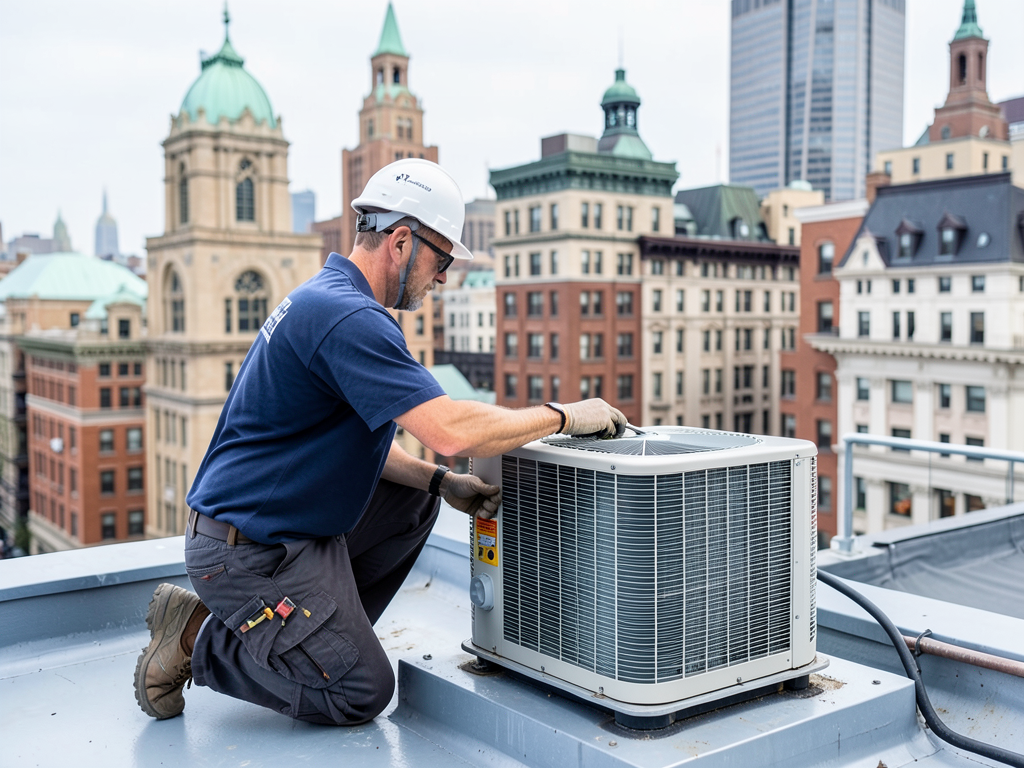
High-rise condo units face different challenges. Shared rooftop condenser units must handle multiple apartments’ cooling loads. When one unit fails, it affects others. Building management often requires specific insurance documentation and union labor for rooftop access, adding coordination complexity.
Philadelphia’s freeze-thaw cycles stress outdoor units. Water seeps into small cracks during winter thaws, then expands when temperatures drop. This damages coil fins and electrical connections. Salt from winter road treatments accelerates corrosion on condenser cabinets and copper refrigerant lines.
What Sets Center City AC Specialists Apart
Technicians familiar with Center City understand the logistics of working in tight urban spaces. They bring smaller service vehicles that navigate narrow alleys and know which buildings have freight elevators for equipment transport. They carry specialized tools for working in confined mechanical rooms common in older Philadelphia buildings.
Experience with Philadelphia’s building codes matters. The city requires permits for major AC replacements and specific licensing through the Pennsylvania Home Improvement Contractor program. Technicians must also hold EPA Section 608 certification for refrigerant handling. These aren’t optional credentials—they’re legal requirements. EPA Section 608 Certification.
Emergency response capability separates reliable contractors from others. Center City residents can’t afford to wait days for repairs during heat waves. The best services maintain 24/7 dispatch and keep fully stocked vehicles ready to handle common failures immediately.
AC Repair vs. Replacement: Making the Right Choice
Age matters significantly in Philadelphia’s climate. Systems over 15 years old struggle with efficiency and reliability. Modern units with SEER2 ratings of 16+ can cut cooling costs by 30-40% compared to older models. However, historic district restrictions may limit visible equipment changes, making repairs more practical than replacements.
Repair costs vary by problem type. Refrigerant leaks require leak detection, repair, and recharge—typically $300-600. Compressor failures often mean replacement, costing $1,500-2,500. Thermostat issues might only need recalibration at $100-200.
Energy efficiency incentives through PECO can offset replacement costs. Current rebates cover up to $300 for high-efficiency systems. Federal tax credits may apply to qualifying equipment installations. PECO Energy Rebates.
Emergency AC Repair: What to Expect
Reliable emergency service follows a predictable process. First, the dispatcher gathers system details and confirms your location. Technicians arrive within promised timeframes—usually 2-4 hours for emergencies in Center City. They perform diagnostic testing to identify the exact failure cause.
Common emergency repairs include capacitor replacement ($150-250), contactor replacement ($200-300), and fan motor repair ($300-400). More serious issues like compressor failure may require system replacement if the unit is older.
Quality contractors provide written estimates before starting work. They explain options clearly, including temporary fixes versus permanent solutions. They also check for related issues like dirty coils or low refrigerant that might cause repeat failures.
Preventing AC Failures in Philadelphia’s Climate
Annual maintenance prevents most emergency calls. Professional tune-ups include coil cleaning, refrigerant level checks, electrical connection tightening, and thermostat calibration. These services cost $150-250 but can extend system life by years.
Philadelphia’s humidity creates indoor air quality concerns. High moisture levels promote mold growth in ductwork and on cooling coils. UV light systems installed in air handlers can reduce biological growth by up to 99%.
Smart thermostats help manage Philadelphia’s temperature swings. They can pre-cool your home during off-peak hours when electricity rates are lower, then maintain comfort during expensive peak periods.
Finding the Right AC Repair Service
Look for contractors with physical offices in or near Philadelphia. Companies based hours away often struggle with traffic and parking, leading to missed appointments. Check for Pennsylvania HIC licensing and EPA certification—these are minimum requirements.
Online reviews matter, but verify they’re recent and specific to Center City service. A contractor with 100 five-star reviews but none from Philadelphia might not understand local requirements. Ask about experience with your building type—rowhome, condo, or commercial.
Price shouldn’t be the only factor. The cheapest option often means inexperienced technicians or inadequate parts inventory. Reliable service costs more upfront but prevents repeat visits and additional damage.
Financing Options for AC Repairs
Major repairs or replacements strain household budgets. Many quality contractors offer financing through third-party lenders with terms from 6 to 60 months. Some provide promotional periods with deferred interest if paid in full.
PECO and federal programs offer rebates for high-efficiency equipment. These can reduce net costs by hundreds of dollars. Contractors familiar with these programs handle paperwork and ensure you receive maximum benefits.
Emergency repair financing prevents choosing between comfort and other necessities. Quick approval processes mean you can get cooling restored immediately while spreading payments over time.
Center City AC Repair: Service Area Specifics
Service coverage in Center City requires understanding neighborhood nuances. Rittenhouse Square buildings often have strict after-hours access rules. Old City historic properties need preservation-compliant installations. Logan Square high-rises require union labor for certain work.
Parking affects service logistics. Some areas have limited street parking during business hours. Reliable contractors either have parking permits or use vehicles small enough for tight spaces. They factor these constraints into arrival times.
Building management requirements vary by property. Some need advance notice for technician access. Others require specific insurance certificates or worker credentials. Experienced contractors handle these administrative requirements smoothly.
Frequently Asked Questions
How quickly can you respond to AC emergencies in Center City?
Emergency calls receive priority scheduling. Most Center City locations get service within 2-4 hours, depending on traffic and current call volume. We maintain fully stocked vehicles to handle common failures immediately.
Do you work on historic Philadelphia rowhomes?
Yes. We understand historic district requirements and can recommend solutions that maintain architectural integrity while providing modern cooling comfort. We handle permit requirements and coordinate with preservation boards when needed.
What brands of AC equipment do you service?
We service all major brands including Carrier, Trane, Lennox, Goodman, and York. Our technicians carry parts for common failures across these brands, reducing wait times for repairs.
Are your technicians licensed and insured?
All technicians hold Pennsylvania HIC licenses and EPA Section 608 certification. We carry comprehensive liability insurance and workers’ compensation coverage for all employees.
Do you offer maintenance plans?
Yes. Annual maintenance plans include spring tune-ups, priority scheduling, and repair discounts. Regular maintenance prevents 80% of common AC failures and extends system life by years.
Don’t Wait Until Your AC Fails Completely
Signs of impending AC failure include unusual noises, weak airflow, warm air from vents, or short cycling. These symptoms indicate problems that worsen over time. Early intervention prevents complete system shutdowns and more expensive repairs.
Philadelphia’s summer heat creates health risks for vulnerable residents. Heat exhaustion and heat stroke become serious concerns when indoor temperatures exceed 85 degrees. Reliable cooling isn’t just about comfort—it’s about safety.
Quality contractors provide honest assessments. They’ll tell you when repairs make sense versus when replacement offers better long-term value. They explain the reasoning behind recommendations and provide options at different price points.
Call Now for Fast, Reliable AC Service
Don’t let another hot Philadelphia day pass without reliable cooling. Our experienced technicians understand Center City’s unique challenges and arrive prepared to solve problems quickly. We stand behind our work with warranties on both parts and labor.
Emergency service is available 24/7. Call (215) 610-9099 now to speak with a dispatcher who will assess your situation and send help immediately. No runaround, no excuses—just professional AC repair that gets your home comfortable again.
For non-emergency service, schedule online or call during business hours. We’ll work with your schedule to find convenient appointment times. Weekend and evening appointments are often available for busy professionals.
Pick up the phone and call (215) 610-9099 before the next heatwave hits. Your comfort and safety matter, and we’re ready to help Center City residents stay cool all summer long.
{
“@context”: “https://schema.org”,
“@type”: “BlogPosting”,
“headline”: “Finding a Reliable AC Repair Service in Center City Philadelphia That Actually Shows Up”,
“description”: “Stop the AC repair runaround. Get fast, expert service in Center City Philadelphia. Call (215) 610-9099 for 24/7 emergency repairs.”,
“wordCount”: 1550,
“datePublished”: “2026-02-12T12:06:00.000Z”,
“dateModified”: “2026-02-12T12:06:00.000Z”,
“inLanguage”: “en-US”,
“mainEntityOfPage”: {
“@type”: “WebPage”,
“@id”: “https://elitehvacphiladelphia.com”
},
“publisher”: {
“@type”: “LocalBusiness”,
“name”: “Elite HVAC Philadelphia”,
“url”: “https://elitehvacphiladelphia.com”
},
“author”: {
“@type”: “Organization”,
“name”: “Elite HVAC Philadelphia”,
“url”: “https://elitehvacphiladelphia.com”
},
“image”: {
“@type”: “ImageObject”,
“url”: “https://elitehvacphiladelphia.com/wp-content/uploads/2026/03/finding-a-reliable-ac-repair-service-in-center-cit-1.png”
}
}
{
“@context”: “https://schema.org”,
“@type”: “HVACBusiness”,
“name”: “Elite HVAC Philadelphia”,
“url”: “https://elitehvacphiladelphia.com”,
“address”: {
“@type”: “PostalAddress”,
“addressLocality”: “Philadelphia”
},
“areaServed”: {
“@type”: “City”,
“name”: “Philadelphia”
}
}
{
“@context”: “https://schema.org”,
“@type”: “FAQPage”,
“mainEntity”: [
{
“@type”: “Question”,
“name”: “How quickly can you respond to AC emergencies in Center City?”,
“acceptedAnswer”: {
“@type”: “Answer”,
“text”: “Emergency calls receive priority scheduling. Most Center City locations get service within 2-4 hours, depending on traffic and current call volume. We maintain fully stocked vehicles to handle common failures immediately.”
}
},
{
“@type”: “Question”,
“name”: “Do you work on historic Philadelphia rowhomes?”,
“acceptedAnswer”: {
“@type”: “Answer”,
“text”: “Yes. We understand historic district requirements and can recommend solutions that maintain architectural integrity while providing modern cooling comfort. We handle permit requirements and coordinate with preservation boards when needed.”
}
},
{
“@type”: “Question”,
“name”: “What brands of AC equipment do you service?”,
“acceptedAnswer”: {
“@type”: “Answer”,
“text”: “We service all major brands including Carrier, Trane, Lennox, Goodman, and York. Our technicians carry parts for common failures across these brands, reducing wait times for repairs.”
}
},
{
“@type”: “Question”,
“name”: “Are your technicians licensed and insured?”,
“acceptedAnswer”: {
“@type”: “Answer”,
“text”: “All technicians hold Pennsylvania HIC licenses and EPA Section 608 certification. We carry comprehensive liability insurance and workers’ compensation coverage for all employees.”
}
},
{
“@type”: “Question”,
“name”: “Do you offer maintenance plans?”,
“acceptedAnswer”: {
“@type”: “Answer”,
“text”: “Yes. Annual maintenance plans include spring tune-ups, priority scheduling, and repair discounts. Regular maintenance prevents 80% of common AC failures and extends system life by years.”
}
}
]
}
{
“@context”: “https://schema.org”,
“@type”: “BreadcrumbList”,
“itemListElement”: [
{
“@type”: “ListItem”,
“position”: 1,
“name”: “Home”,
“item”: “https://elitehvacphiladelphia.com”
},
{
“@type”: “ListItem”,
“position”: 2,
“name”: “Blog”,
“item”: “https://elitehvacphiladelphia.com/blog”
},
{
“@type”: “ListItem”,
“position”: 3,
“name”: “Finding a Reliable AC Repair Service in Center City Philadelphia That Actually Shows Up”
}
]
}
{
“@context”: “https://schema.org”,
“@type”: “Service”,
“serviceType”: “HVAC”,
“provider”: {
“@type”: “LocalBusiness”,
“name”: “Elite HVAC Philadelphia”,
“url”: “https://elitehvacphiladelphia.com”
},
“areaServed”: {
“@type”: “City”,
“name”: “Philadelphia”
},
“description”: “Stop the AC repair runaround. Get fast, expert service in Center City Philadelphia. Call (215) 610-9099 for 24/7 emergency repairs.”
}